Τετάρτη 4 Νοεμβρίου 2020

Skin Diseases among the Old Age Residents in a Nursing Home: A Neglected Problem

Alexandros G.Sfakianakis shared this article with you from Inoreader

drp.banner.jpg

Background. Geriatric health care has become a worldwide concern, but a few statistical studies were carried out about skin diseases in this age group in the nursing home of Iran. Aims. In this study, we set out to determine the frequency as well as the age and gender distribution of dermatological diseases in nursing home old age residents. Methods. In a cross-sectional study, all patients over 60 years who were living in a charity nursing home complex of Rasht in 2017 participated in this study. Baseline information on sociodemographic variables, past medical history, and medication were gathered by medical staff during a face-to-face interview. Full-body skin examination was done by dermatologists. Biopsy, and pathological and laboratory methods were used to confirm the diagnosis of suspected lesions or di sease. Results. In this study, 259 people underwent the study. 52.9% were male, and their mean age was 73.5 years (SD = 9.1 years). Hypertension (20.9%); diabetes mellitus (9.7%), and hypothyroidism (2.3%) were the most common underlying diseases. Most of them (85.7%) had age-related skin changes. The benign neoplasm was the most common skin disease among patients (68.3%), followed by infectious diseases (46.3%) and erythemo-squamous (31.6%). None of them had precancerous lesions or skin cancers. There were not any differences between skin disorders and gender or age groups in this study. Conclusion. Our study suggests that skin manifestations and diseases are common among nursing home old age residents in this area. Therefore, this should constitute one of the top priorities of aged care physicians and nurses.
View on the web

Effects of Yinzhihuang Granules on Serum Liver Enzymes in Jaundice Patients: A Real-World Study Based on HIS Data

Alexandros G.Sfakianakis shared this article with you from Inoreader

ecam.banner.jpg

Objective. Our aim was to analyze the influence of Yinzhihuang granules on serum liver enzymes in jaundice patients and to provide real-world evidence for the efficacy evaluation of Yinzhihuang granules in treating jaundice. Methods. We constructed a data warehouse which integrates real-world electronic medical records from the hospital information system of multiple 3A hospitals in China and used a descriptive statistical method to analyze the changes in the serum liver enzymes of the jaundice patients treated with Yinzhihuang granules and then used Wilcoxon signed-rank to test the changes in the indicators caused by the treatment. Results. After being treated with Yinzhihuang granules, the jaundice patients had a decrease in the average serum levels of total bilirubin, indirect bilirubin, aspartate amino transferase, glutamyl transpeptidase, and alkaline phosphatase, and the differences were statistically significant () but had no significant changes in the average serum levels of direct bilirubin and alanine aminotransferase ().Conclusion. The data analysis on the real-world electronic medical records demonstrate that Yinzhihuang granules help to reduce jaundice patients' serum levels of total bilirubin, indirect bilirubin, aspartate aminotransferase, glutamyl transpeptidase, and alkaline phosphatase, but there is no evidence that Yinzhihuang granules help to reduce the jaundice patients' serum levels of direct bilirubin and alanine aminotransferase.
View on the web

Palbociclib Plus Exemestane with GnRH Agonist versus Capecitabine in Premenopausal Women with Hormone Receptor-Positive Metastatic Breast Cancer: A Prospective, Open-Label, Randomized Phase ll Trial (KCSG-BR 15-10)

Alexandros G.Sfakianakis shared this article with you from Inoreader
Μέσω Cancers

cancers-12-03265-g001-550.jpg

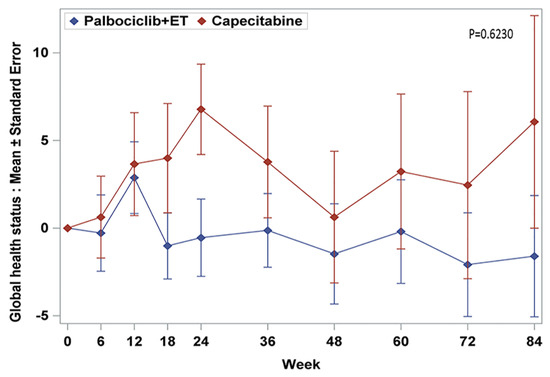
Cancers, Vol. 12, Pages 3265: Patient-Reported Outcomes of Palbociclib Plus Exemestane with GnRH Agonist versus Capecitabine in Premenopausal Women with Hormone Receptor-Positive Metastatic Breast Cancer: A Prospective, Open-Label, Randomized Phase ll Trial (KCSG-BR 15-10)

Cancers doi: 10.3390/cancers12113265

Authors: Soohyeon Lee Seock-Ah Im Gun Min Kim Kyung Hae Jung Seok Yun Kang In Hae Park Jee Hyun Kim Kyoung Eun Lee Hee Kyung Ahn Moon Hee Lee Hee-Jun Kim Han Jo Kim Jong In Lee Su-Jin Koh Yeon Hee Park

In the era of CDK4/6 inhibitors in hormone receptor (HR)-positive, HER2-negative metastatic breast cancer, few trials have been specifically studied to compare quality of life between palbociclib plus endocrine therapy (ET) and cytotoxic chemotherapy exclusively in premenopausal women. We aimed to evaluate differences of patient report outcomes (PROs) between palbociclib plus ET and capecitabine. PROs were assessed using EORTC QLQ-C30 at baseline, every 6 weeks, and the end of treatment. All EORTC QLQ-30 scores were maintained from baseline to the end of treatment. Patients treated palbociclib plus ET arm experienced delay in time-to-deterioration of physical functioning (HR = 0.58, 95% CI, 0.36 to 0.84, p = 0.0058), nausea and vomiting (HR = 0.48; 95% CI, 0.32 to 0.73, p = 0.0005), and diarrhea (HR = 0.42; 95% CI, 0.27 to 0.65, p = 0.001). There was a numeric trend for worsening of insomnia (HR = 1.43; 95% CI, 0.96 to 2.16, p = 0.079) and favoring of appetite loss (HR = 0.69, 95 % CI, 0.44 to 1.07, p = 0.09) in the palbociclib plus ET arm. Premenopausal patients with palbociclib plus ET maintained QoL without compromising treatment efficacy.


View on the web

Effectiveness of Perindopril/Indapamide Single-Pill Combination in Uncontrolled Patients with Hypertension: A Pooled Analysis of the FORTISSIMO, FORSAGE, ACES and PICASSO Observational Studies

Alexandros G.Sfakianakis shared this article with you from Inoreader

12325.jpg

Abstract

Introduction

Our objective was to determine the effectiveness of a perindopril/indapamide (Per/Ind) single-pill combination (SPC) in a broad range of patient profiles, including subgroups with varying hypertension severity, age and cardiovascular risk profiles.

Methods

Patient data from four large prospective observational studies (FORTISSIMO, FORSAGE, PICASSO, ACES) were pooled. In each study, patients already treated for hypertension were switched to Per/Ind 10/2.5 mg SPC and systolic and diastolic blood pressure (SBP/DBP) measured at the 1-month (M1) and 3-month (M3) visits. Study endpoints included change in SBP and DBP from baseline to M1 and M3 and the percentage of patients achieving BP control (SBP/DBP < 140/90 mmHg for patients without diabetes or < 140/85 mmHg for patients with diabetes).

Results

A total of 16,763 patients were enrolled and received Per/Ind (94% received the full dose of 10/2.5). Mean patient age was 61.4 years (36% were ≥ 65 years old), 57% were women, and 16% had isolated systolic hypertension (ISH). Mean baseline office SBP/DBP was 162/94 mmHg, and mean duration of hypertension was 11 years. Cardiovascular risk factors and comorbid conditions were common in this population. Significant mean reductions in SBP (− 23 mmHg) and DBP (− 11 mmHg) were observed at M1 compared with baseline (P < 0.001), which were maintained at M3 (− 30 mmHg and − 14 mmHg, respectively). At M3, BP control was achieved by 70% of patients (78% for ISH). In patients with SBP ≥ 180 mmHg at baseline (grade III hypertension), the mean SBP/DBP decrease was − 51/− 20 mmHg and 53% achieved BP control. Per/Ind was well tolerated with an overall rate of adv erse events of 1.3%, most frequently cough and dizziness at rates of 0.3% and 0.2%, respectively.

Conclusion

In this hypertensive population including difficult-to-control patient subgroups, switching to Per/Ind 10/2.5 mg SPC led to rapid and important reductions in BP. BP control was achieved in 70% of patients overall in an everyday practice context.

View on the web

Cinacalcet as a First-Line Treatment in Neonatal Severe Hyperparathyroidism Secondary to Calcium Sensing Receptor (CaSR) Mutation

Alexandros G.Sfakianakis shared this article with you from Inoreader
Introduction: Neonatal severe hyperparathyroidism (NSHPT) is a rare cause of neonatal hypercalcemia caused by a loss of function mutation in the calcium-sensing receptor (CaSR). Hypercalcemia in NSHPT can be life-threatening. Maintenance of serum calcium within a safe range is the primary goal of treatment through hydration, forced diuresis, and bisphosphonate treatment, nevertheless most cases require parathyroidectomy. We report a case with NSHPT diagnosed on the first day of life (DoL) and successfully treated with cinacalcet as the first-line treatment from the 2nd DoL up to the age of 18 months. Case Report: A full-term baby evaluated for weight loss at postnatal 14th hour and found to have hypercalcemia (14.4 mg/dL, reference range [RR]: 8.0–11.3). Despite hydration and diuresis, hypercalcemia persisted. Further evaluation revealed a parathyroid hormone (PTH) level of 1,493 pg/mL (RR: 15–65) and urine Ca/Cr of 0.09 mg/mg (RR: 0.03– 0.81). Cinacalcet treatment was initiated on the 2nd DoL with the diagnosis of NSHPT due to hypocalciuric hypercalcemia and elevated PTH level. Ca levels decreased to normal levels on the 7th DoL. She was discharged from hospital at postnatal day 15 on cinacalcet treatment and still continued at 18 months of age. Sequencing of CaSR revealed a novel homozygous c.1836G#x3e;A (p.G613E) mutation in the patient, for which the parents and sister were heterozygous. Conclusion: This case represents the youngest age at cinacalcet initiation and the longest duration without parathyroidectomy in a homozygous NSHPT and demonstrates that cinacalcet is an effective first-line treatment in patients who are responsive to this treatment modality and allows avoiding/delay in surgical intervention in NSHPT.
Horm Res Paediatr
View on the web

Assessment of D-Shaped Annulus of Mitral Valve in Patients with Severe MR Using Semi-Automated 4-Dimensional Analysis: Implications for Transcatheter Interventions

Alexandros G.Sfakianakis shared this article with you from Inoreader

JCDD, Vol. 7, Pages 48: Assessment of D-Shaped Annulus of Mitral Valve in Patients with Severe MR Using Semi-Automated 4-Dimensional Analysis: Implications for Transcatheter Interventions

Journal of Cardiovascular Development and Disease doi: 10.3390/jcdd7040048

Authors: N. Mai Vo Suzanne E. van Wijngaarden Nina Ajmone Marsan Jeroen J. Bax Victoria Delgado

The development of transcatheter mitral valve replacement therapies requires accurate post-processing analysis tools to provide D-shaped mitral annulus dimensions from 3-dimensional (3D) data. The agreement between two semi-automated, software packages to process 3D transesophageal echocardiography (TEE) data for the measurement of the mitral valve annulus dimensions was evaluated. 3DTEE data of patients with moderate&ndash;severe mitral regurgitation (MR) were postprocessed with semi-automated, vendor-independent (VI) software and vendor-specific (VS) software. Both post-processing software provided key measurements for the selection of transcatheter valve prosthesis size: annulus area, annulus circumference and the septal-to-lateral distance of the annulus. The intertrigonal distance was provided only by the VS software. The inter- and intra-observer agreements were assessed with Bland&ndash;Altman analysis. Of 105 patients (63.8 &plusmn; 11 years, 66% male) with MR , 28 had secondary MR, 45 fibroelastic deficiency, and 32 Barlow&rsquo;s disease. Using VS software, the dimensions for the overall population were 16.1 &plusmn; 4.6 cm2 for annulus area, for circumference 14.4 &plusmn; 1.9 cm, intertrigonal distance 3.4 &plusmn; 0.5 cm and septal-to-lateral distance 3.8 &plusmn; 0.6 cm. Similar dimensions were obtained using VI software: 15.7 &plusmn; 4.6 cm2 for annulus area, 14.5 &plusmn; 2.0 cm for circumference, and 4.1 &plusmn; 0.6 cm for septal-to-lateral distance. The inter- and intra-observer agreement for both software programs was excellent. In conclusion, current post-processing software programs for 3DTEE data of the mitral valve annulus provide good reproducibility of key measurements to select the transcatheter prosthesis size.

View on the web

Anatomy of Mitral Valve Complex as Revealed by Non-Invasive Imaging: Pathological, Surgical and Interventional Implications

Alexandros G.Sfakianakis shared this article with you from Inoreader

JCDD, Vol. 7, Pages 49: Anatomy of Mitral Valve Complex as Revealed by Non-Invasive Imaging: Pathological, Surgical and Interventional Implications

Journal of Cardiovascular Development and Disease doi: 10.3390/jcdd7040049

Authors: Laura Anna Leo Vera Lucia Paiocchi Susanne Anna Schlossbauer Elisa Gherbesi Francesco F. Faletra

Knowledge of mitral valve (MV) anatomy has been accrued from anatomic specimens derived by cadavers, or from direct inspection during open heart surgery. However, today two-dimensional and three-dimensional transthoracic (2D/3D TTE) and transesophageal echocardiography (2D/3D TEE), computed tomography (CT) and cardiac magnetic resonance (CMR) provide images of the beating heart of unprecedented quality in both two and three-dimensional format. Indeed, over the last few years these non-invasive imaging techniques have been used for describing dynamic cardiac anatomy. Differently from the &ldquo;dead&rdquo; anatomy of anatomic specimens and the &ldquo;static&rdquo; anatomy observed during surgery, they have the unique ability of showing &ldquo;dynamic&rdquo; images from beating hearts. The &ldquo;dynamic&rdquo; anatomy gives us a better awareness, as any single anatomic arrangement corresponds perfectly to a specific function. Understanding normal an atomical aspects of MV apparatus is of a paramount importance for a correct interpretation of the wide spectrum of patho-morphological MV diseases. This review illustrates the anatomy of MV as revealed by non-invasive imaging describing physiological, pathological, surgical and interventional implications related to specific anatomical features of the MV complex.

View on the web