Τετάρτη 12 Οκτωβρίου 2022

Optimizing SARS-CoV-2 Pooled Testing Strategies Through Differentiated Pooling for Distinct Groups

alexandrossfakianakis shared this article with you from Inoreader
Abstract
Pooled testing has been successfully used to expand SARS-CoV-2 testing, especially in settings requiring high volumes of screening of lower-risk individuals, but efficiency of pooling declines as prevalence rises.We propose a differentiated pooling strategy that independently optimizes pool sizes for distinct groups with different probabilities of infection to further improve the efficiency of pooled testing. We compare the efficiency (results obtained per test kit used) of the differentiated strategy to a traditional pooling strategy in which all samples are processed using uniform pool sizes under a range of scenarios.For most scenarios, differentiated pooling is more efficient than traditional pooling. In scenarios examined here, an improvement in efficiency of up to 3.94 results per test kit could be obtained through differentiated versus traditional pooling, with more likely scenarios resulting in 0.12 to 0.61 additional results per kit. Und er circumstances similar to those observed in a university setting, implementation of our strategy could result in an improvement in efficiency between 0.03 to 3.21 results per test kit.Our results can help identify settings, such as universities and workplaces, where differentiated pooling can conserve critical testing resources.
View on Web

Using indocyanine green angiography to achieve complete engraftment of pectoralis major myocutaneous flaps

alexandrossfakianakis shared this article with you from Inoreader
This report describes the usefulness of indocyanine green angiography (ICGA) to achieve complete engraftment of the PMMC flap. Five patients with oral cancer underwent reconstruction with a PMMC flap after cancer ablation. During the skin paddle design and flap elevation, the blood supply to the flap was assessed by ICGA. (Source: International Journal of Oral and Maxillofacial Surgery)
View on Web

Τρίτη 11 Οκτωβρίου 2022

Does ACE2 mediate the detrimental effect of exposures related to COVID‐19 risk: A Mendelian randomization investigation

alexandrossfakianakis shared this article with you from Inoreader

Abstract

Objectives

Adiposity, smoking and lower socioeconomic position (SEP) increase COVID-19 risk whilst the association of vitamin D, blood pressure, and glycemic traits in COVID-19 risk were less clear. Whether angiotensin-converting enzyme 2 (ACE2), the key receptor for SARS-CoV-2, mediates these associations has not been investigated. We conducted a Mendelian randomization study to assess the role of these exposures in COVID-19 and mediation by ACE2.

Methods

We extracted genetic variants strongly related to various exposures (vitamin D, blood pressure, glycemic traits, smoking, adiposity and educational attainment (SEP proxy)), and ACE2 cis-variants from genome wide association studies (GWAS, n ranged from 28,204 to 3,037,499) and applied them to GWAS summary statistics of ACE2 (n=28,204) and COVID-19 (severe, hospitalized, and susceptibility, n≤2,942,817). We used inverse variance weighted as the main analyses, with MR-Egger and weighted median as sensitivit y analyses. Mediation analyses were performed based on product of coefficient method.

Results

Higher adiposity, lifetime smoking index, and lower educational attainment were consistently associated with higher risk of COVID-19 phenotypes whilst there was no strong evidence for an association of other exposures in COVID-19 risk. ACE2 partially mediates the detrimental effects of body mass index (ranged from 4.3% to 8.2%), waist-to-hip ratio (ranged from 11.2% to 16.8%) and lower educational attainment (ranged from 4.0% to 7.5%) in COVID-19 phenotypes whilst ACE2 did not mediate the detrimental effect of smoking.

Conclusions

We provided genetic evidence that reducing ACE2 could partly lower COVID-19 risk amongst people who were overweight/obese or of lower SEP.

This article is protected by copyright. All rights reserved.

View on Web

High-Resolution Single Tooth MRI With an Inductively Coupled Intraoral Coil—Can MRI Compete With CBCT?

alexandrossfakianakis shared this article with you from Inoreader
imageObjectives The aims of this study were to quantify T1/T2-relaxation times of the dental pulp, develop a realistic tooth model, and compare image quality between cone-beam computed tomography (CBCT) and high-resolution magnetic resonance imaging (MRI) of single teeth using a wireless inductively coupled intraoral coil. Methods T1/T2-relaxometry was performed at 3 T in 10 healthy volunteers (283 teeth) to determine relaxation times of healthy dental pulp and develop a realistic tooth model using extracted human teeth. Eight MRI sequences (DESS, CISS, TrueFISP, FLASH, SPACE, TSE, MSVAT-SPACE, and UTE) were optimized for clinically applicable high-resolution imaging of the dental pulp. In model, image quality of all sequences was assessed quantitatively (contrast-to-noise ratio) and qualitatively (visibility of anatomical structures and extent of susceptibility artifacts using a 5-point scoring scale). Cone-beam computed tomography served as the reference modality for qualitative assessment. Statistical analysis was performed using 2-way analysis of variance, Fisher exact test, and Cohen κ. Results In vivo, relaxometry of dental pulps revealed T1/T2 relaxation times at 3 T of 738 ± 100/171 ± 36 milliseconds. For all sequences, an isotropic resolution of (0.21 mm)3 was achieved, with acquisition times ranging from 6:19 to 8:02 minutes. In model, the highest contrast-to-noise ratio values were observed for UTE, followed by TSE and CISS. The best image/artifact quality, however, was found for DESS (mean ± SD: 1.3 ± 0.3/2.2 ± 0.0), FLASH (1.5 ± 0.3/2.4 ± 0.1), and CISS (1.5 ± 0.4/2.5 ± 0.1), at a level comparable to CBCT (1.2 ± 0.3/2.1 ± 0.1). Conclusions Optimized MRI protocols using an intraoral coil at 3 T can achieve an image quality comparable to reference modality CBCT within clinically applicable acquisition times. Overall, DESS revealed the best results, followed by FLASH and CISS.
View on Web

HOXA3 and KDM6A cooperate in transcriptional control of aerobic glycolysis and glioblastoma progression

alexandrossfakianakis shared this article with you from Inoreader
Abstract
Background
Alterations in transcriptional regulators of glycolytic metabolism have been implicated in brain tumor growth, but the underlying molecular mechanisms remain poorly understand.
Methods
Knockdown and overexpression cells were used to explore the functional roles of HOXA3 in cell proliferation, tumor formation and aerobic glycolysis. Chromatin immunoprecipitation, luciferase assays and western blotting were performed to verify the regulation of HK2 and PKM2 by HOXA3. PLA, Immunoprecipitation and GST pull down assays were used to examine the interaction of HOXA3 and KDM6A.
Results
We report that transcription factor homeobox A3 (HOXA3), which is aberrantly highly expressed in glioblastoma (GBM) patients and predicts poor prognosis, transcriptionally activates aerobic glycolysis, leading to a significant acceleration in cell proliferation and tumor growth. Mechanically, we identified KDM6A, a lysine-specific dem ethylase, as an important cooperator of HOXA3 to regulating aerobic glycolysis. HOXA3 activates KDM6A transcription and recruits KDM6A to genomic binding sites of glycolytic genes, targeting glycolytic genes for transcriptional activation by removing the suppressive histone modification H3K27 trimethylation. Further evidences demonstrate that HOXA3 requires KDM6A for transcriptional activation of aerobic glycolysis and brain tumor growth.
Conclusion
Our findings provide a novel molecular mechanism linking HOXA3-mediated transactivation and KDM6A-coupled H3K27 demethylation in regulating glucose metabolism and GBM progression.
View on Web

Δευτέρα 10 Οκτωβρίου 2022

Nasal and Plasma SARS-CoV-2 RNA Levels are Associated with Timing of Symptom Resolution in the ACTIV-2 Trial of Non-hospitalized Adults with COVID-19

alexandrossfakianakis shared this article with you from Inoreader

cid_ogimage.png

Abstract
Acute COVID-19 symptoms limit daily activities, but little is known about its association with SARS-CoV-2 viral burden. In this exploratory analysis of placebo recipients in the ACTIV-2/A5401 platform trial, we showed that high anterior nasal (AN) RNA levels and detectable plasma RNA were associated with delayed symptom improvement.
View on Web

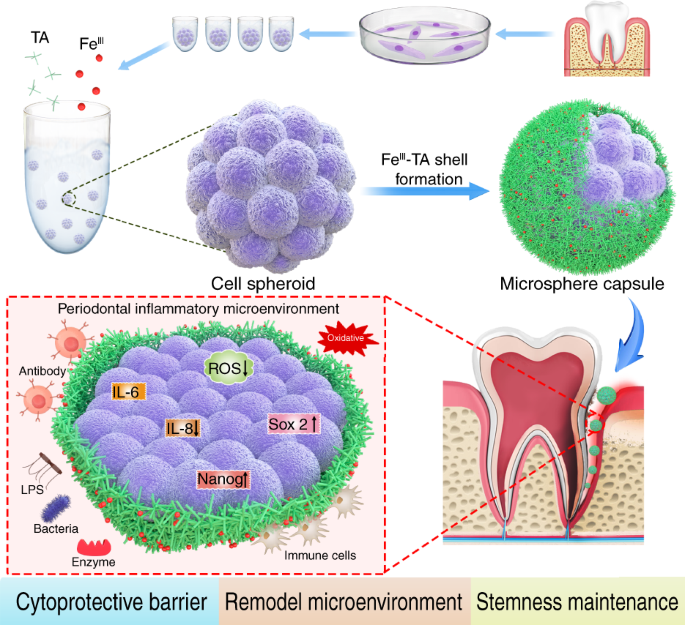
Stem cell microencapsulation maintains stemness in inflammatory microenvironment

alexandrossfakianakis shared this article with you from Inoreader

41368_2022_198_Figa_HTML.png

International Journal of Oral Science, Published online: 10 October 2022; doi:10.1038/s41368-022-00198-w

Stem cell microencapsulation maintains stemness in inflammatory microenvironment
View on Web