Τρίτη 11 Οκτωβρίου 2022

HOXA3 and KDM6A cooperate in transcriptional control of aerobic glycolysis and glioblastoma progression

alexandrossfakianakis shared this article with you from Inoreader
Abstract
Background
Alterations in transcriptional regulators of glycolytic metabolism have been implicated in brain tumor growth, but the underlying molecular mechanisms remain poorly understand.
Methods
Knockdown and overexpression cells were used to explore the functional roles of HOXA3 in cell proliferation, tumor formation and aerobic glycolysis. Chromatin immunoprecipitation, luciferase assays and western blotting were performed to verify the regulation of HK2 and PKM2 by HOXA3. PLA, Immunoprecipitation and GST pull down assays were used to examine the interaction of HOXA3 and KDM6A.
Results
We report that transcription factor homeobox A3 (HOXA3), which is aberrantly highly expressed in glioblastoma (GBM) patients and predicts poor prognosis, transcriptionally activates aerobic glycolysis, leading to a significant acceleration in cell proliferation and tumor growth. Mechanically, we identified KDM6A, a lysine-specific dem ethylase, as an important cooperator of HOXA3 to regulating aerobic glycolysis. HOXA3 activates KDM6A transcription and recruits KDM6A to genomic binding sites of glycolytic genes, targeting glycolytic genes for transcriptional activation by removing the suppressive histone modification H3K27 trimethylation. Further evidences demonstrate that HOXA3 requires KDM6A for transcriptional activation of aerobic glycolysis and brain tumor growth.
Conclusion
Our findings provide a novel molecular mechanism linking HOXA3-mediated transactivation and KDM6A-coupled H3K27 demethylation in regulating glucose metabolism and GBM progression.
View on Web

Δευτέρα 10 Οκτωβρίου 2022

Nasal and Plasma SARS-CoV-2 RNA Levels are Associated with Timing of Symptom Resolution in the ACTIV-2 Trial of Non-hospitalized Adults with COVID-19

alexandrossfakianakis shared this article with you from Inoreader

cid_ogimage.png

Abstract
Acute COVID-19 symptoms limit daily activities, but little is known about its association with SARS-CoV-2 viral burden. In this exploratory analysis of placebo recipients in the ACTIV-2/A5401 platform trial, we showed that high anterior nasal (AN) RNA levels and detectable plasma RNA were associated with delayed symptom improvement.
View on Web

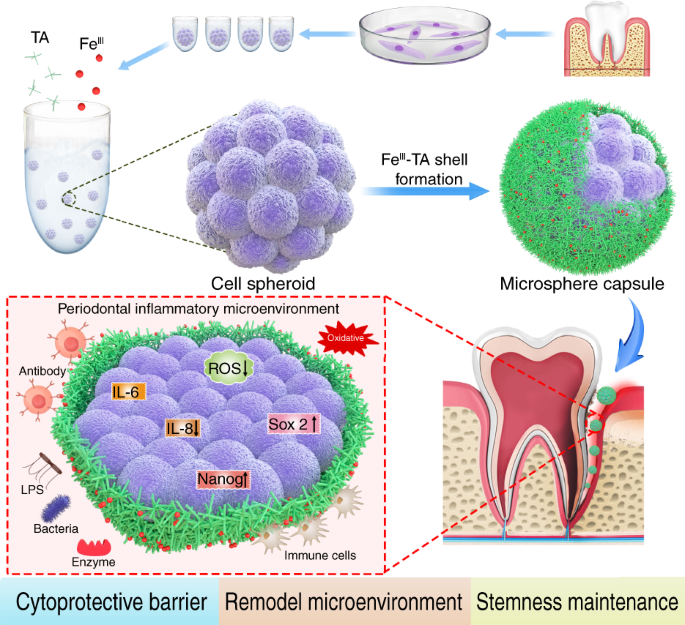
Stem cell microencapsulation maintains stemness in inflammatory microenvironment

alexandrossfakianakis shared this article with you from Inoreader

41368_2022_198_Figa_HTML.png

International Journal of Oral Science, Published online: 10 October 2022; doi:10.1038/s41368-022-00198-w

Stem cell microencapsulation maintains stemness in inflammatory microenvironment
View on Web

Κυριακή 9 Οκτωβρίου 2022

Effectiveness of pulpotomy compared with root canal treatment in managing non‐traumatic pulpitis associated with spontaneous pain: A systematic review and meta‐analysis

alexandrossfakianakis shared this article with you from Inoreader

Abstract

Abstract

Background

Pulpitis characterized by spontaneous pain can result in debilitating pain. Dogma has existed to offer only have two treatment options, namely, root canal treatment (RCT) or extraction although, pulpotomy has always remained a potential treatment modality.

Objective

This review aimed to answer the following research question: "Does pulpotomy (partial or full)(I) result in better patient and clinical reported outcomes (O), compared to RCT (C) in permanent teeth with pulpitis characterized by spontaneous pain (P) evaluated at various time intervals? (T).

Methods

Two authors independently performed study selection, data extraction and risk of bias assessment. The literature search was conducted in the following electronic databases: Clarivate Analytics' Web of Science, Scopus, PubMed, and Cochrane Central Register of Controlled Trials. English language clinical trials comparing the patient and clinical reported outcomes between RCT and pulpotomy were included. The meta-analysis was performed on a fixed-effect model and the quality of evidence assessed by the Grading of Recommendations, Assessment, Development and Evaluations (GRADE) approach.

Results

Two randomised clinical trials, were included. Among two trials, one has published four reports at different time points involving same cohorts. The meta-analysis revealed no difference in postoperative pain (Day 7) between RCT and pulpotomy (OR= 0.99,95% CI 0.63 – 1.55,I2=0%) and quality of evidence was graded as "High". Clinical success was high at year 1, 98% for both interventions, however decreased over time to 78.1% (pulpotomy) and 75.3% (RCT) at 5 years.

Discussion

Pulpotomy is a definitive treatment modality that is as effective as RCT . This could have a significant impact on treatment of such patients affording the advantages of retaining a vital pulp and preventing the need for RCT.

Conclusion

This review could only include two trials, hence there is insufficient evidence to draw robust conclusions. The clinical data accumulated so far suggests no difference in pain between RCT and pulpotomy at day 7 postoperatively and a single randomised control trial suggests that the clinical success rate for both treatment modalities is similar long term. There is a need for more well-designed trials by different research groups to develop a stronger evidence base in this area.

View on Web

Πέμπτη 6 Οκτωβρίου 2022

Single‐rooted extraction socket classification: A systematic review and proposal of a new classification system based on morphologic and patient‐related factors

alexandrossfakianakis shared this article with you from Inoreader

Abstract

Taxonomy and classification of a disease contributes to facilitating the diagnosis and treatment planning process and simplifies communication between clinicians. The aim of this study was to provide a critical appraisal based on a systematic review of the single-rooted extraction socket (ES) classifications and subsequently, introduce a new classification system combining the cornerstones of the previously proposed systems and based on the latest consensus in implant dentistry. Following the systematic search process in PubMed, EMBASE, and SCOPUS databases 13 ES classifications were detected. The most repeated hard and soft tissue factors in the previous classifications were buccal bone dehiscence, interproximal bone, gingival recession, and soft tissue phenotype. However, there was minimal attention to patient-related factors such as systemic conditions and smoking. Therefore, a new classification system based on the combination of patient-related factors, clinical and radiograp hical parameters was proposed. This divides an ES into three types. Class I and II sockets are candidates for receiving immediate implant placement and conversely, a class III socket includes a compromised condition that requires multiple-stage reconstruction mostly suitable for standard delayed implant placement with alveolar ridge preservation. Within the limitations of this study, the new classification system not only provides comprehensive inclusion of various crucial parameters in implant placement (such as prediction of future implant position and osteotomy difficulty, etc.) but also, in contrast to the previously introduced systems, is able to classify the ES prior to extraction and also, takes into the account the patient-related factors as the class modifiers following the extraction.

View on Web

Acinetobacter baumannii: Pathogenesis, virulence factors, novel therapeutic options and mechanisms of resistance to antimicrobial agents with emphasis on tigecycline

alexandrossfakianakis shared this article with you from Inoreader
Acinetobacter baumannii: Pathogenesis, virulence factors, novel therapeutic options and mechanisms of resistance to antimicrobial agents with emphasis on tigecycline

This article summarizes the microbiological and virulence traits in A.baumannii. In addition, in this study, the mechanisms of resistance to tigecycline have been comprehensively investigated and novel therapeutic strategies have been expressed.


Abstract

What is known and objective

Acinetobacter baumannii is one of the most important nosocomial pathogens with the ability to cause infections such as meningitis, pneumonia, urinary tract, septicaemia and wound infections. A wide range of virulence factors are responsible for pathogenesis and high mortality of A. baumannii including outer membrane proteins, lipopolysaccharide, capsule, phospholipase, nutrient- acquisition systems, efflux pumps, protein secretion systems, quarom sensing and biofilm production. These virulence factors contribute in pathogen survival in stressful conditions and antimicrobial resistance.

Comment

According to the World Health Organization (WHO), A. baumannii is one of the most resistant pathogens of ESKAPE group (Enterococcus faecium, Staphylococcus aureus, Klebsiella pneumoniae, A. baumannii, Pseudomonas aeruginosa and Enterobacter spp.). In recent years, resistance to a wide range of antibiotics in A. baumannii has significantly increased and the high emergence of extensively drug resistant (XDR) isolates is challenging. Among therapeutic antibiotics, resistance to tigecycline as a last resort antibiotic has become a global concern. Several mechanisms are involved in tigecycline resistance, the most important of which is RND (Resistance-Nodulation-Division) family efflux pumps overexpression. The development of new therapeutic strategies to confront A. baumannii infections has been very promising in recent years.

What is new and conclusion

In the present review we highlight microbiological and virulence traits in A. baumannii and peruse the tigecycline resistance mechanisms and novel therapeutic options. Among the novel therapeutic strategies we focus on combination therapy, drug repurposing, novel antibiotics, bacteriophage therapy, antimicrobial peptides (AMPs), human monoclonal antibodies (Hu-mAbs), nanoparticles and gene editing.

View on Web

Differentiation of eosinophilic and non‐eosinophilic chronic rhinosinusitis on preoperative computed tomography using deep learning

alexandrossfakianakis shared this article with you from Inoreader

Abstract

Objective

This study aimed to develop deep learning (DL) models for differentiating between eosinophilic chronic rhinosinusitis (ECRS) and non-ECRS (NECRS) on preoperative CT.

Methods

A total of 878 chronic rhinosinusitis (CRS) patients undergoing nasal endoscopic surgery at Renmin Hospital of Wuhan University (Hubei, China) between October 2016 to June 2021 were included. Axial spiral CT images were pre-processed and used to build the dataset. Two semantic segmentation models based on U-net and Deeplabv3 were trained to segment the sinus area on CT images. All patient images were segmented using the better-performing segmentation model and used for training and testing of the transferred efficientnet_b0, resnet50, inception_resnet_v2, and Xception neural networks. Additionally, we evaluated the performances of the models trained using each image and each patient as a unit. The precision of each model was assessed based on the receiver operating characteristic curve. Further, we analyzed the confusion matrix and accuracy of each model.

Results

The Dice coefficients of U-net and Deeplabv3 were 0.953 and 0.961, respectively. The average area under the curve and mean accuracy values of the four networks were 0.848 and 0.762 for models trained using a single image as a unit, while the corresponding values for models trained using each patient as a unit were 0.893 and 0.853, respectively.

Conclusion

Combining semantic segmentation with classification networks could effectively distinguish between patients with ECRS and those with NECRS based on preoperative sinus CT images. Furthermore, labeling each patient to build a dataset for classification may be more reliable than labeling each medical image.

This article is protected by copyright. All rights reserved.

View on Web