Κυριακή 29 Νοεμβρίου 2020

Health State Utilities of Patients with Heart Failure: A Systematic Literature Review

alkiviadis.1961 shared this article with you from Inoreader

40273.jpg

Abstract

Background and Objectives

New treatments and interventions are in development to address clinical needs in heart failure. To support decision making on reimbursement, cost-effectiveness analyses are frequently required. A systematic literature review was conducted to identify and summarize heart failure utility values for use in economic evaluations.

Methods

Databases were searched for articles published until June 2019 that reported health utility values for patients with heart failure. Publications were reviewed with specific attention to study design; reported values were categorized according to the health states, 'chronic heart failure', 'hospitalized', and 'other acute heart failure'. Interquartile limits (25th percentile 'Q1', 75th percentile 'Q3') were calculated for health states and heart failure subgroups where there were sufficient data.

Results

The systematic literature review identified 161 publications based on data from 142 studies. Utility values for chronic heart failure were reported by 128 publications; 39 publications published values for hospitalized and three for other acute heart failure. There was substantial heterogeneity in the specifics of the study populations, methods of elicitation, and summary statistics, which is reflected in the wide range of utility values reported. EQ-5D was the most used instrument; the interquartile limit for mean EQ-5D values for chronic heart failure was 0.64–0.72.

Conclusions

There is a wealth of published utility values for heart failure to support economic evaluations. Data are heterogenous owing to specificities of the study population and methodology of utility value elicitation and analysis. Choice of value(s) to support economic models must be carefully justified to ensure a robust economic analysis.

View on the web

Effect of manual aspiration thrombectomy using large-bore aspiration catheter for acute basilar artery occlusion: comparison with a stent retriever system

alkiviadis.1961 shared this article with you from Inoreader

Abstract

Background

A large-bore aspiration catheter can be employed for recanalization of acute basilar artery occlusion. Here we compare the results of mechanical thrombectomy using a stent retriever (SR) and manual aspiration thrombectomy (MAT) using a large-bore aspiration catheter system as a first-line recanalization method in acute basilar artery occlusion (BAO).

Methods

The records of 50 patients with acute BAO who underwent mechanical thrombectomy were retrospectively reviewed. Patients were assigned to one of two groups based on the first-line recanalization method. The treatment and clinical outcomes were compared.

Results

Sixteen (32%) patients were treated with MAT with a large-bore aspiration catheter and 34 (68%) with a SR as the first-line treatment method. The MAT group had a shorter procedure time (28 vs. 65 min; p = 0.001), higher rate of first-pass recanalization (68.8% vs. 38.2%, p = 0.044), and lower median number of passes (1 vs 2; p = 0.008) when compared with the SR group. There was no significant difference in the incidence of any hemorrhagic complication (6.3% vs. 8.8%; p = 0.754) between the groups. However, there were four cases of procedure-related subarachnoid hemorrhage (SAH) in the SR group and one death occurred due to massive hemorrhage.

Conclusions

Selection of MAT using a large-bore aspiration catheter for acute BAO may be a safe and effective first-line treatment method with higher first-pass recanalization rate and shorter procedure time than SR.

View on the web

Lost in Transition: Health Care Experiences of Adults Born Very Preterm—A Qualitative Approach

alkiviadis.1961 shared this article with you from Inoreader

605149_Thumb_400.jpg

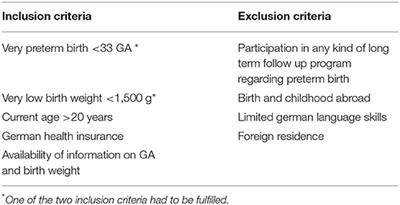
Introduction: Adults Born Very Preterm (ABP) are an underperceived but steadily increasing patient population. It has been shown that they face multiple physical, mental and emotional health problems as they age. Very little is known about their specific health care needs beyond childhood and adolescence. This article focuses on their personal perspectives: it explores how they feel embedded in established health care structures and points to health care-related barriers they face.

Methods: We conducte d 20 individual in-depth interviews with adults born preterm aged 20–54 years with a gestational age (GA) below 33 weeks at birth and birth weights ranging from 870–1,950 g. Qualitative content analysis of the narrative interview data was conducted to identify themes related to self-perceived health, health care satisfaction, and social well-being.

Results: The majority (85%) of the study participants reported that their former prematurity is still of concern in their everyday lives as adults. The prevalence of self-reported physical (65%) and mental (45%) long-term sequelae of prematurity was high. Most participants expressed dissatisfaction with health care services regarding their former prematurity. Lack of consideration for their prematurity status by adult health care providers and the invisibility of the often subtle impairments they face were named as main barriers to receiving adequate health care. Age and burden of disease were important factors influencing parti cipants' perception of their own health and their health care satisfaction. All participants expressed great interest in the provision of specialized, custom-tailored health-care services, taking the individual history of prematurity into account.

Discussion: Adults born preterm are a patient population underperceived by the health care system. Longterm effects of very preterm birth, affecting various domains of life, may become a substantial burden of disease in a subgroup of formerly preterm individuals and should therefore be taken into consideration by adult health care providers.

View on the web

Retrospective Assessment of Risk Factors for Head and Neck Cancer Among World Trade Center General Responders

alkiviadis.1961 shared this article with you from Inoreader

488057_Thumb_400.jpg

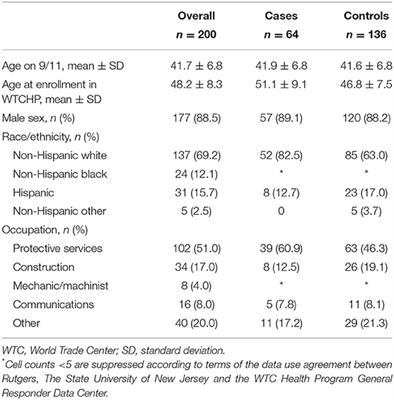
Objective: To assess the reliability of a questionnaire designed to reconstruct risk factors for head and neck cancer relative to the 9/11 World Trade Center (WTC) response and over the lifetime.

Methods: As part of a nested case-control study, 200 WTC Health Program (WTCHP) General Responder Cohort (GRC) members completed a newly-developed study questionnaire via telephone (with a trained interviewer) or online (self-administered). We assessed agreement between measures of tobacco and alcohol use in ou r questionnaire results and data collected previously during WTCHP-GRC monitoring visits using Cohens Kappa (κ) and intraclass correlation coefficient (ICC) for categorical and continuous measures, respectively. We compared agreement by disease status, survey mode, and year of WTCHP enrollment.

Results: We observed high agreement between measures of lifetime, pre-WTC, and post-WTC smoking prevalence (all κ > 0.85) and smoking duration (all ICC > 0.84). There was moderate agreement between measures of smoking frequency (ICC: 0.61–0.73). Agreement between measures of smoking frequency, but not duration, differed by disease status, and agreement between smoking measures was higher for participants who completed our survey by phone than by web. Among cases, there were no differences based on enrollment in the WTCHP before or after diagnosis.

Conclusion: Agreement between measures was generally high, although potential reporting bias and a mode effect that should be considered when interpreting analyses of self-reported data in this population; however differential misclassification appears to be minimal. Our questionnaire may be useful for future studies examining similar behavioral risk factors among disaster-exposed populations.

View on the web

Rapid-Cycle Evaluation in an Early Intervention Program for Children With Developmental Disabilities in South India: Optimizing Service Providers' Quality of Work-Life, Family Program Engagement, and School Enrollment

alkiviadis.1961 shared this article with you from Inoreader

567907_Thumb_400.jpg

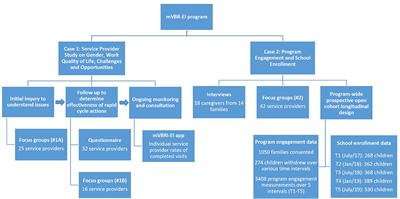
Background: This paper explores how implementation and refinement of an early intervention (EI) program for children with delayed development was informed by an iterative, intentional and structured process of measurement. Providing access to early intervention therapy for children in rural areas of India is challenging due to a lack of rehabilitation therapists and programs. Following a biopsychosocial framework and principles of community-based rehabilitation, a non-governmental organization, Amar Seva San gam (ASSA), overcame those barriers by designing a digital technology supported EI program in rural Tamil Nadu, India. Program objectives included providing service access; supporting program engagement, child development and school enrollment; and positioning the intervention for scale-up. This paper contributes to a growing body of literature on how program design and implementation can be informed through a cyclical process of data collection, analysis, reflection, and adaptation.

Methods: Through several strands of data collection, the design and implementation of the EI program was adapted and improved. This included qualitative data from focus groups and interviews with caregivers and service providers, and a mobile application that collected and monitored longitudinal quantitative data, including program engagement rates, developmental progression, caregiver outcomes, and school enrollment status.

Results: Measurements throughout the program informed decision-maki ng by identifying facilitators and barriers to service providers' quality of work-life, family program engagement, and school enrollment. Consultation with key stakeholders, including caregivers and service providers, and data driven decision making led to continual program changes that improved service provider quality of work-life, program engagement and school enrollment. These changes included addressing gender-related work challenges for service providers; forming caregiver support networks; introducing psychological counseling for caregivers; providing medical consultations and assistive devices; creating community awareness programs; improving access to therapy services; focusing on caregiver education, motivation and support; and advocacy for accessibility in schools.

Conclusion: The process of using evidence-informed and stakeholder driven adaptations to the early intervention program, led to improved service provider quality of work-life, greater program engagement, improved school enrollment and positioned the intervention for scale-up, providing lessons that may be beneficial in other contexts.


View on the web

Prediction of Epidemics Trend of COVID-19 in Bangladesh

alkiviadis.1961 shared this article with you from Inoreader

559437_Thumb_400.jpg

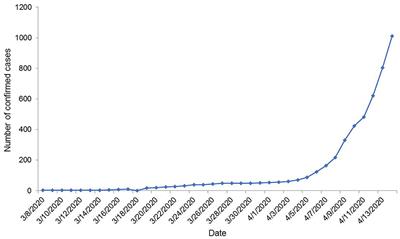
Background: Amid a critical and emergent situation like the coronavirus disease (COVID-19) pandemic related to extreme health and economic repercussions, we used and presented the mathematical modeling like susceptible–infectious–recovered (SIR) to have a numerical demonstration that can shed light to decide the fate of the scourge in Bangladesh. To describe the idea about the factors influencing the outbreak data, we presented the current situation of the COVID-19 outbreak with graphical trends.

M ethods: Primary data were collected and analyzed by using a pre-created Google Survey form having a pre-set questionnaire on the social distancing status of different districts. Secondary data on the total and the daily number of laboratory tests, confirmed positive cases, and death cases were extracted from the publicly available sources to make predictions. We estimated the basic reproduction number (R) based on the SIR mathematical model and predicted the probable fate of this pandemic in Bangladesh.

Results: Quarantine situations in different regions of Bangladesh were evaluated and presented. We also provided tentative forecasts until 31 May 2020 and found that the predicted curve followed the actual curve approximately. Estimated R-values (6.924) indicated that infection rate would be greater than the recovery rate. Furthermore, by calibrating the parameters of the SIR model to fit the reported data, we assume the ultimate ending of the pandem ic in Bangladesh by December 2022.

Conclusion: We hope that the results of our analysis could contribute to the elucidation of critical aspects of this outbreak and help the concerned authority toward decision making.

View on the web

Hyoscine butylbromide versus acetaminophen for nonspecific colicky abdominal pain in children: a randomized controlled trial [Research]

alkiviadis.1961 shared this article with you from Inoreader

48.cover-source.jpg

BACKGROUND:

Less than two-thirds of children with abdominal pain in the emergency department receive analgesia. We sought to determine whether hyoscine butylbromide was superior to acetaminophen for children with nonspecific colicky abdominal pain.

METHODS:

We randomly allocated children aged 8–17 years with nonspecific colicky abdominal pain who presented to the pediatric emergency department of London Health Sciences Centre, London, Ontario to receive hyoscine butylbromide, 10 mg given orally, or acetaminophen, 15 mg/kg given orally (maximum 975 mg). We considered the minimal clinically important difference for the primary outcome (self-reported pain at 80 min) to be 13 mm on a 100 mm visual analogue scale. Secondary outcomes included administration of rescue analgesia, adverse effects and pain score less than 30 mm at 80 minutes.

RESULTS:

A total of 236 participants (120 in the hyoscine butylbromide group and 116 in the acetaminophen group) were included in the trial. The mean visual analogue scale scores at 80 minutes were 29 mm (standard deviation [SD] 26 mm) and 30 mm (SD 29 mm) with hyoscine butylbromide and acetaminophen, respectively (adjusted difference 1, 95% confidence interval –7 to 7). Rescue analgesia was administered to 4 participants (3.3%) in the hyoscine butylbromide group and 1 participant (0.9%) in the acetaminophen groups (p = 0.2). We found no significant differences in rates of adverse effects between hyoscine butylbromide (32/116 [27.6%]) and acetaminophen (28/115 [24.3]) (p = 0.5); no serious adverse effects were observed. The proportion with a pain score less than 30 mm at 80 minutes was 66 (55.0%) with hyoscine butylbromide and 63 (54.3%) with acetaminophen (p = 0.9).

INTERPRETATION:

Hyoscine butylbromide was not superior to acetaminophen in this setting. Both agents were associated with clinically important pain reduction, and either can be considered for children presenting to the emergency department with nonspecific colicky abdominal pain. Trial registration: Clinicaltrials.gov, no. NCT02582307

View on the web