Τετάρτη 5 Σεπτεμβρίου 2018

Perceptual Encoding in Auditory Brainstem Responses: Effects of Stimulus Frequency
Purpose
A central question about auditory perception concerns how acoustic information is represented at different stages of processing. The auditory brainstem response (ABR) provides a potentially useful index of the earliest stages of this process. However, it is unclear how basic acoustic characteristics (e.g., differences in tones spanning a wide range of frequencies) are indexed by ABR components. This study addresses this by investigating how ABR amplitude and latency track stimulus frequency for tones ranging from 250 to 8000 Hz.
Method
In a repeated-measures experimental design, listeners were presented with brief tones (250, 500, 1000, 2000, 4000, and 8000 Hz) in random order while electroencephalography was recorded. ABR latencies and amplitudes for Wave V (6–9 ms) and in the time window following the Wave V peak (labeled as Wave VI; 9–12 ms) were measured.
Results
Wave V latency decreased with increasing frequency, replicating previous work. In addition, Waves V and VI amplitudes tracked differences in tone frequency, with a nonlinear response from 250 to 8000 Hz and a clear log-linear response to tones from 500 to 8000 Hz.
Conclusions
Results demonstrate that the ABR provides a useful measure of early perceptual encoding for stimuli varying in frequency and that the tonotopic organization of the auditory system is preserved at this stage of processing for stimuli from 500 to 8000 Hz. Such a measure may serve as a useful clinical tool for evaluating a listener's ability to encode specific frequencies in sounds.
Supplemental Material
https://doi.org/10.23641/asha.6987422from #Audiology via ola Kala on Inoreader https://ift.tt/2wL00Ly
via IFTTT
Study Warns of the Unintended Effects of White Noise Therapy for Tinnitus
Noise exposure therapies may be doing more harm than good, suggested a review article recently published in JAMA Otolaryngology. While sound therapies like white noise provide short-term relief for people with various conditions, including tinnitus, they may undermine the overall functional and structural integrity of the brain, and even accelerate its aging.
Tinnitus affects over 50 million people in the United States. While there is no cure for this disabling condition, sound therapy is one of the most common approaches to manage tinnitus. In fact, there is some evidence that point to the benefits of noise-based sound therapy in providing relief from disturbing tinnitus percepts via auditory masking. However, neuroscientists from University of California San Francisco and with Posit Science argue that the potential adverse effects of auditory masking via noise therapy might actually outweigh its benefits.
"Increasing evidence shows that the brain rewires for the worse when it is fed random information, such as white noise. Neural inhibition is reduced, temporal integration times increase, and cortical representations lose precision," lead author Mouna Attarha, PhD, told The Hearing Journal. "These maladaptive changes in the brain have consequences that, with time, exacerbate the tinnitus, degrade functioning of the auditory system, and compromise other important cognitive processes, such as language comprehension. A therapeutic strategy so often recommended needs to be more fully understood, including its unintended and often overlooked consequences."
Evaluating therapies in the context of brain health and cognition is vital, noted the authors. "We became interested in writing this editorial after noting widespread use of white noise generators by health professionals across a number of settings – hospitals, treatment centers, therapy offices, ICUs," Attarha shared.
Noting the need for alternative therapies, the authors suggest exploring the potential of structure sounds and other strategies that don't have a negative impact on the brain.
"Health professionals should have a sense of how repeated exposure to randomly-generated information, even at low volume levels, remodels the brain and should offer structured sounds as the alternative," Attarha suggested. "Structured sounds – such as music and speech – can successfully mask or "cover" phantom sounds heard in the head without compromising the structural and functional integrity of the brain. Given how distressing tinnitus can be to some, a treatment program could also include emerging interventions to the extent that those interventions show initial efficacy and demonstrate low-risk."
These treatment programs include validated computerized brain training and stimulus timing dependent plasticity. "Ultimately, the resolution of tinnitus will require programs that can remodel and restore the organization of the brain," Attarha noted.
Published: 9/4/2018 11:43:00 AM
from #Audiology via ola Kala on Inoreader https://ift.tt/2PFrr0q
via IFTTT
Study Warns of the Unintended Effects of White Noise Therapy for Tinnitus
Noise exposure therapies may be doing more harm than good, suggested a review article recently published in JAMA Otolaryngology. While sound therapies like white noise provide short-term relief for people with various conditions, including tinnitus, they may undermine the overall functional and structural integrity of the brain, and even accelerate its aging.
Tinnitus affects over 50 million people in the United States. While there is no cure for this disabling condition, sound therapy is one of the most common approaches to manage tinnitus. In fact, there is some evidence that point to the benefits of noise-based sound therapy in providing relief from disturbing tinnitus percepts via auditory masking. However, neuroscientists from University of California San Francisco and with Posit Science argue that the potential adverse effects of auditory masking via noise therapy might actually outweigh its benefits.
"Increasing evidence shows that the brain rewires for the worse when it is fed random information, such as white noise. Neural inhibition is reduced, temporal integration times increase, and cortical representations lose precision," lead author Mouna Attarha, PhD, told The Hearing Journal. "These maladaptive changes in the brain have consequences that, with time, exacerbate the tinnitus, degrade functioning of the auditory system, and compromise other important cognitive processes, such as language comprehension. A therapeutic strategy so often recommended needs to be more fully understood, including its unintended and often overlooked consequences."
Evaluating therapies in the context of brain health and cognition is vital, noted the authors. "We became interested in writing this editorial after noting widespread use of white noise generators by health professionals across a number of settings – hospitals, treatment centers, therapy offices, ICUs," Attarha shared.
Noting the need for alternative therapies, the authors suggest exploring the potential of structure sounds and other strategies that don't have a negative impact on the brain.
"Health professionals should have a sense of how repeated exposure to randomly-generated information, even at low volume levels, remodels the brain and should offer structured sounds as the alternative," Attarha suggested. "Structured sounds – such as music and speech – can successfully mask or "cover" phantom sounds heard in the head without compromising the structural and functional integrity of the brain. Given how distressing tinnitus can be to some, a treatment program could also include emerging interventions to the extent that those interventions show initial efficacy and demonstrate low-risk."
These treatment programs include validated computerized brain training and stimulus timing dependent plasticity. "Ultimately, the resolution of tinnitus will require programs that can remodel and restore the organization of the brain," Attarha noted.
Published: 9/4/2018 11:43:00 AM
from #Audiology via ola Kala on Inoreader https://ift.tt/2PFrr0q
via IFTTT
Eficacia de un programa de fluidez lectora con escolares disléxicos
Publication date: Available online 5 September 2018
Source: Revista de Logopedia, Foniatría y Audiología
Author(s): Natalia Ferrada Quezada, Paula Outón Oviedo
Resumen
Antecedentes y objetivo
Una de las dificultades más comunes en la dislexia es la falta de fluidez lectora. Esta dificultad consiste en leer un texto con mucho esfuerzo, empleando excesivo tiempo y sin la expresión adecuada. El tratamiento de esta dificultad ha comprendido diversas estrategias, siendo la lectura oral repetida una de las más utilizadas. Los objetivos de este estudio fueron comprobar la eficacia de un programa de fluidez lectora centrado en la lectura repetida y expresiva de textos teatrales y determinar si su efectividad depende de la realidad sociocultural y económica de los estudiantes.
Método
En el estudio participaron 11 estudiantes de tercero y cuarto curso de educación primaria con dislexia, distribuidos en dos grupos según el centro educativo de procedencia (público o concertado). Para comprobar la eficacia del programa se optó por un diseño preexperimental pretest postest. Como variables dependientes de la fluidez se utilizaron la exactitud, la automatización y la prosodia, medidas a través de la lectura de textos teatrales, la prueba Fundar y una Escala de Apreciación de la Prosodia.
Resultados
Los resultados mostraron que los participantes mejoraron significativamente en automatización y prosodia, pero no tanto en exactitud lectora. Además, el programa obtuvo resultados similares en ambos grupos de estudiantes.
Conclusiones
Estos hallazgos coinciden con otros estudios y sugieren que la lectura de textos teatrales es una estrategia eficaz para la mejora de la fluidez lectora en el alumnado disléxico de estas edades.
Abstract
Background and objective
One of the most common difficulties for dyslexics is the lack of reading fluency. This difficulty involves a lot of effort in order to read a text, spending an excessive amount of time, and with a lack of expressiveness. For the treatment of this difficulty, several strategies have been considered, repeated reading being the most commonly used. The aims of this study are to determine the effectiveness of an intervention programme aimed at improving reading fluency through theatre scripts, and observe whether the results depend upon students’ sociocultural and economic background.
Method
The sample consisted of 11 third- and fourth-grade students with dyslexia distributed into two groups according to the educational centre of provenance (public or charter school). A pre-experimental design pre-test and post-test study approach was used to prove the effectiveness of the programme. Automation and prosody were evaluated as accuracy-dependent variables through the reading of theatrical texts, the Fundar Reading Proficiency test, and a Scale of Prosody Assessment.
Results
Results indicate that children improved significantly in automation and prosody, but not that much in reading accuracy. Furthermore, the programme obtained similar results in both groups.
Conclusions
These findings match other studies and suggest that the reading of theatrical texts is an effective strategy for improving reading fluency in dyslexic students of this age group.
from #Audiology via ola Kala on Inoreader https://ift.tt/2Q49U2R
via IFTTT
Eficacia de un programa de fluidez lectora con escolares disléxicos
Publication date: Available online 5 September 2018
Source: Revista de Logopedia, Foniatría y Audiología
Author(s): Natalia Ferrada Quezada, Paula Outón Oviedo
Resumen
Antecedentes y objetivo
Una de las dificultades más comunes en la dislexia es la falta de fluidez lectora. Esta dificultad consiste en leer un texto con mucho esfuerzo, empleando excesivo tiempo y sin la expresión adecuada. El tratamiento de esta dificultad ha comprendido diversas estrategias, siendo la lectura oral repetida una de las más utilizadas. Los objetivos de este estudio fueron comprobar la eficacia de un programa de fluidez lectora centrado en la lectura repetida y expresiva de textos teatrales y determinar si su efectividad depende de la realidad sociocultural y económica de los estudiantes.
Método
En el estudio participaron 11 estudiantes de tercero y cuarto curso de educación primaria con dislexia, distribuidos en dos grupos según el centro educativo de procedencia (público o concertado). Para comprobar la eficacia del programa se optó por un diseño preexperimental pretest postest. Como variables dependientes de la fluidez se utilizaron la exactitud, la automatización y la prosodia, medidas a través de la lectura de textos teatrales, la prueba Fundar y una Escala de Apreciación de la Prosodia.
Resultados
Los resultados mostraron que los participantes mejoraron significativamente en automatización y prosodia, pero no tanto en exactitud lectora. Además, el programa obtuvo resultados similares en ambos grupos de estudiantes.
Conclusiones
Estos hallazgos coinciden con otros estudios y sugieren que la lectura de textos teatrales es una estrategia eficaz para la mejora de la fluidez lectora en el alumnado disléxico de estas edades.
Abstract
Background and objective
One of the most common difficulties for dyslexics is the lack of reading fluency. This difficulty involves a lot of effort in order to read a text, spending an excessive amount of time, and with a lack of expressiveness. For the treatment of this difficulty, several strategies have been considered, repeated reading being the most commonly used. The aims of this study are to determine the effectiveness of an intervention programme aimed at improving reading fluency through theatre scripts, and observe whether the results depend upon students’ sociocultural and economic background.
Method
The sample consisted of 11 third- and fourth-grade students with dyslexia distributed into two groups according to the educational centre of provenance (public or charter school). A pre-experimental design pre-test and post-test study approach was used to prove the effectiveness of the programme. Automation and prosody were evaluated as accuracy-dependent variables through the reading of theatrical texts, the Fundar Reading Proficiency test, and a Scale of Prosody Assessment.
Results
Results indicate that children improved significantly in automation and prosody, but not that much in reading accuracy. Furthermore, the programme obtained similar results in both groups.
Conclusions
These findings match other studies and suggest that the reading of theatrical texts is an effective strategy for improving reading fluency in dyslexic students of this age group.
from #Audiology via ola Kala on Inoreader https://ift.tt/2Q49U2R
via IFTTT
Τρίτη 4 Σεπτεμβρίου 2018
Evaluation of Modern Remote Microphone Technologies
Using remote microphone technology is the most effective method to improve speech recognition in noise for hearing aid users, with a variety of different remote microphone solutions available today. In this investigation, adult hearing aid users were tested with their hearing aids alone and in combination with three remote microphones differing in the type of microphone and gain behavior. 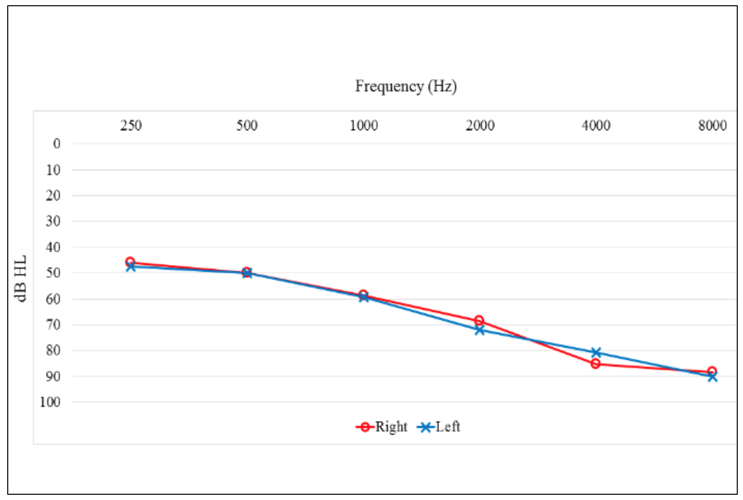
from #Audiology via ola Kala on Inoreader https://ift.tt/2wDlUiM
via IFTTT
from #Audiology via ola Kala on Inoreader https://ift.tt/2wDlUiM
via IFTTT
Εγγραφή σε:
Αναρτήσεις (Atom)