Τρίτη 5 Ιουλίου 2022

Associated factors of primary snoring and obstructive sleep apnea in patients with sleep bruxism: a questionnaire study

alexandrossfakianakis shared this article with you from Inoreader

Abstract

Background

By being aware of the associated factors of primary snoring (PS) and obstructive sleep apnea (OSA) in sleep bruxism (SB) patients, dentists may contribute to the screening and early recognition of SB patients with PS or OSA.

Objective

To identify the associated factors of PS and OSA from questionnaire-based data in SB patients.

Methods

A total of 968 self-reported SB patients (31.6% men; median age 44.5 years) were retrospectively enrolled. Self-reported sleep-related breathing status (viz., no sleep-related breathing condition, PS, and OSA) was the dependent variable. Independent variables were questionnaire-based data on demographics, lifestyle, psychological status, pain, and sleep.

Results

For PS, no statistically significant associated factor was identified in analyses. For OSA, increased age (OR = 1.04 [1.03-1.06]), male gender (OR = 3.33 [2.17-5.00]), daily alcohol consumption (OR = 1.96 [1.18-3.33]), depression (OR = 1.10 [1.06-1.14]), daytime sleepiness (OR = 2.94 [1.85-4.76]), and high risk of gastroesophageal reflux disease (GERD; OR = 2.63 [1.52-4.76]) were found to be significant risk factors, while high risk of temporomandibular disorder (TMD) pain (OR = 0.51 [0.30-0.86]) and chronic pain (OR = 0.73 [0.59-0.90]) were significant protective factors. These results were confirmed in the subsequent network analysis.

Conclusion

Within the limitations of this study, no associated factor is identified for PS. For OSA, dentists should keep in mind that increased age, male gender, daily alcohol consumption, depression, daytime sleepiness, and high GERD risk are associated with increased OSA risk in SB patients, while high TMD pain risk and chronic pain are associated with decreased OSA risk in this population.

View on Web

Validation of a health-related quality of life questionnaire in patients with recurrent Clostridioides difficile infection in ECOSPOR III, a Phase 3 randomized trial

alexandrossfakianakis shared this article with you from Inoreader
Abstract
Background
Debilitating symptoms of recurrent Clostridioides difficile infection (rCDI) often lead to long-term effects on health-related quality-of-life (HRQOL). In ECOSPOR III, SER-109, an investigational oral microbiome therapeutic, was superior to placebo in reducing rCDI. We investigated the validity, reliability, and responsiveness of a 32-item, CDI-specific questionnaire (Cdiff32) across mental, physical, and social domains in patients with rCDI.
Methods
In this post-hoc analysis of a Phase 3 clinical trial, 182 outpatients with rCDI completed Cdiff32 and EQ-5D at baseline, 1 and 8 weeks. Cdiff32 was evaluated for item performance, internal reliability, and convergent validity. To assess known-groups validity, Cdiff32 scores were compared across recurrent versus non-recurrent patients at week 1; internal responsiveness was evaluated in non-re current patients by 8 weeks by paired t-test.
Results
All 182 patients (mean age 65.5 ± 16.5, 59.9% female) completed baseline Cdiff32. Confirmatory factor analysis identified 3 domains (physical, mental, and social relationships) with good item fit. High internal reliability was demonstrated (Cronbach's alpha = 0.94 with all subscales > 0.80). Convergent validity was evidenced by significant correlations between Cdiff32 subscales and EQ-5D (r range: 0.29-0.37, p < 0.001). Cdiff32 differentiated recurrent from non-recurrent patients at week 1 (effect sizes: 0.38-0.42; p < 0.05 overall), with significant improvement from baseline to week 8 in non-recurrent patients (effect sizes: 0.75-1.02; p < 0.001 overall).
Conclusions
Cdiff32 is a valid, reliable, and responsive disease-specific HRQOL questionnaire fit-for-purpose for interventional treatment trials. The significant improvement in non-recurrent patients by 8 weeks demonstra tes the negative impact of rCDI on HRQOL.
View on Web

Δευτέρα 4 Ιουλίου 2022

Perioperative Antibiotic Stewardship in the Organ Transplant Setting

alexandrossfakianakis shared this article with you from Inoreader

Abstract

Background

Solid organ transplant (SOT) recipients can benefit from traditional antimicrobial stewardship (AMS) activities directed to improve judicious perioperative prescribing and management, but evidence is lacking. The aim of this expert opinion review is to provide an update on the current landscape of application of AMS practices for optimization of perioperative prophylaxis (PP).

Methods

We reviewed the available literature on early post-operative infectious complications in SOT and PP management, on modified perioperative approaches in case of infection or colonization in recipients and donors and on AMS in transplantation PP.

Results

SOT recipients are at high risk for early post-operative infectious complications due to the complexity of surgical procedures, severity of end stage organ disease, net state of immunosuppression in the post-transplant period and to the high risk for multidrug resistant organism. Moreover, SOT may be exposed to preservation fluid infections and expected or unexpected donor-derived infections. We summarize main factors to take into account when prescribing transplant PP.

Conclusion

Creating personalized PP to avoid unwanted consequences of antimicrobials while improving outcomes is an emerging and critical aspect in SOT setting. Further studies are needed to offer best PP tailored to SOT type and to evaluate interventions efficacy and safety.

This article is protected by copyright. All rights reserved

View on Web

Κυριακή 3 Ιουλίου 2022

Incremental value of risk factor variability for cardiovascular risk prediction in individuals with type 2 diabetes: results from UK primary care electronic health records

alexandrossfakianakis shared this article with you from Inoreader

m_dyac140f1.jpeg?Expires=1719761580&Sign

Abstract
BackgroundCardiovascular disease (CVD) risk prediction models for individuals with type 2 diabetes are important tools to guide intensification of interventions for CVD prevention. We aimed to assess the added value of incorporating risk factors variability in CVD risk prediction for people with type 2 diabetes.
Methods
We used electronic health records (EHRs) data from 83 910 adults with type 2 diabetes but without pre-existing CVD from the UK Clinical Practice Research Datalink for 2004–2017. Using a landmark-modelling approach, we developed and validated sex-specific Cox models, incorporating conventional predictors and trajectories plus variability of systolic blood pressure (SBP), total and high-density lipoprotein (HDL) cholesterol, and glycated haemoglobin (HbA1c). Such models were compared against simpler models using single last observed values or means.
Results
The standard deviations (SDs) of SBP, HDL cholesterol and HbA1c were associat ed with higher CVD risk (P < 0.05). Models incorporating trajectories and variability of continuous predictors demonstrated improvement in risk discrimination (C-index = 0.659, 95% CI: 0.654–0.663) as compared with using last observed values (C-index = 0.651, 95% CI: 0.646–0.656) or means (C-index = 0.650, 95% CI: 0.645–0.655). Inclusion of SDs of SBP yielded the greatest improvement in discrimination (C-index increase = 0.005, 95% CI: 0.004–0.007) in comparison to incorporating SDs of total cholesterol (C-index increase = 0.002, 95% CI: 0.000–0.003), HbA1c (C-index increase = 0.002, 95% CI: 0.000–0.003) or HDL cholesterol (C-index increase= 0.003, 95% CI: 0.002–0.005).
Conclusion
Incorporating variability of predictors from EHRs provides a modest improvement in CVD risk discrimination for individuals with type 2 diabetes. Given that repeat measures are readily available in E HRs especially for regularly monitored patients with diabetes, this improvement could easily be achieved.
View on Web

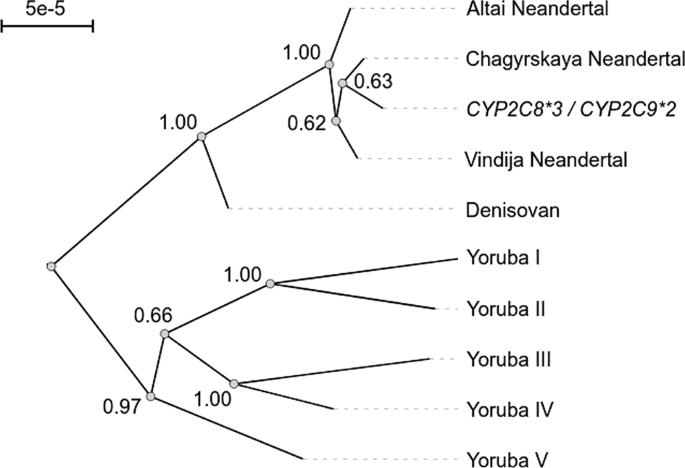
The clinically relevant CYP2C8*3 and CYP2C9*2 haplotype is inherited from Neandertals

alexandrossfakianakis shared this article with you from Inoreader

41397_2022_284_Fig1_HTML.png

The Pharmacogenomics Journal, Published online: 02 July 2022; doi:10.1038/s41397-022-00284-6

The clinically relevant CYP2C8*3 and CYP2C9*2 haplotype is inherited from Neandertals
View on Web

Does three-dimensional intraglandular location predict malignancy in parotid tumors?

alexandrossfakianakis shared this article with you from Inoreader
Tumors arising within the parotid encompass a heterogeneous mix of benign and malignant neoplasms and other tissue growths. The purpose of this study was to determine the association between the location of intraparotid masses and the risk of malignancy. A retrospective cohort study was performed of patients diagnosed with parotid tumors following open tumor excision. The primary predictor variable was the location of the epicenter of the tumor in three-dimensional space, as determined from preoperative imaging. (Source: International Journal of Oral and Maxillofacial Surgery)
View on Web

Recovery from the damage of cranial radiation modulated by memantine, an NMDA receptor antagonist combined with hyperbaric oxygen therapy

alexandrossfakianakis shared this article with you from Inoreader
Abstract
Background
Radiotherapy is an important treatment option for central nervous system malignancies. However, cranial radiation induces hippocampal dysfunction and white matter injury; this leads to cognitive dysfunction, and results in a reduced quality of life in patients. Excitatory glutamate signaling through N-methyl-D-aspartate receptors (NMDARs) plays a central role both in hippocampal neurogenesis and in the myelination of oligodendrocytes in the cerebrum.
Methods
We will provide the method for quantifying neurogenesis in human subjects in live brain during the cancer therapy. Neuroimaging using behavioral task we originally create, to examine human hippocampal memory pathway in patients with brain disorders.
Results
Treatment with memantine, a non-competitive NMDAR antagonist, reversed impairment in hippocampal pattern separation networks as detected by functional magnetic resonance imaging. Hyperbaric preconditi oning of the patients just before radiotherapy with memantine most reversed white matter injury as detected by whole brain analysis with Tract-Based Spatial Statics. Neuromodulation combined with the administration of hyperbaric oxygen therapy and memantine during radiotherapy facilitated the restoration of hippocampal function and white matter integrity, and improved higher cognitive function in patients receiving cranial radiation.
Conclusions
The method for therapy and diagnosis of hippocampal function we developed can be applicable to the patients received cranial radiation to restore the cognitive decline. The monitoring can be followed during the therapy that production of new neurons by which ability of pattern separation is increased, then recovery of pattern completion, followed by new score elevation.
View on Web