Κυριακή 8 Ιανουαρίου 2023

Effect of sintering on the translucency of CAD‐CAM lithium disilicate restorations: a comparative in vitro study

alexandrossfakianakis shared this article with you from Inoreader

Abstract

Purpose

The available independent data on the translucency of novel pre and fully sintered chair-side computer-aided design and computer-aided manufacturing (CAD-CAM) lithium disilicate are limited. This comparative in vitro study evaluated the translucency degree of pre and fully sintered chairside CAD-CAM lithium disilicate crowns after optional, required, and additional firing processes.

Materials and Methods

One hundred and five maxillary left central incisor crowns manufactured by three different CAD-CAM lithium disilicate brands shade A1 were assigned into 7 groups as follows (n = 15): (1) n!ce Straumann without sintering; (2) n!ce Straumann with one additional sintering process; (3) n!ce Straumann with two additional sintering processes; (4) Amber Mill with one sintering process; (5) Amber Mill with two sintering processes; (6) IPS e.max CAD with one sintering process; (7) IPS e.max CAD with two sintering processes. The translucency of all crowns was evaluated with a color imaging spectrophotometer. All statistical analyses were performed using statistical software. A standard level of significance was set at α < 0.05.

Results

All the milled crowns presented different degrees of translucency, and additional sintering processes altered it. IPS E.max CAD with two (4.33 ± 0.26) and one (4.01 ± 0.15) sintering processes displayed the highest translucency, whereas n!ce Straumann with no sintering process provided the lowest value (2.82 ± 0.16).

Conclusions

The translucency of chairside lithium disilicate single-unit full-coverage restorations manufactured with subtractive technology was significantly influenced by the brand and the number of sintering processes. The traditional presintered IPS e.max CAD and the fully crystallized glass-ceramic n!ce Straumann considerably increased the translucency after one additional firing process, whereas Amber Mill decreased its translucency.

This article is protected by copyright. All rights reserved

View on Web

Drug‐induced radiation recall reactions and non‐anticancer drugs: A descriptive analysis from VigiBase®

alexandrossfakianakis shared this article with you from Inoreader

Abstract

Background

Radiation recall reactions are inflammatory reactions confined to previously irradiated tissues, often of drug-induced etiology, particularly with anticancer therapies. Other drugs, in particular COVID-19 vaccines, may also be involved.

Objective

To describe radiation recall reactions under non-anticancer drugs more precisely.

Material and method

We extracted the cases of radiation recall reactions associated with non-anticancer drugs from WHO pharmacovigilance database VigiBase®. We performed two analyses from this extraction: a global analysis and an analysis focusing on vaccination-related issues.

Results

We extracted 120 cases corresponding to 269 drugs, of which 130 were non-anticancer (22 vaccines). Among the non-anticancer drugs, tozinameran was the most reported treatment (4.46% of cases), followed by levofloxacin (2.97%) and folinic acid (2.60%), dexamethasone (2.23), ChAdOx1 nCoV-19 vaccine and prednisone (1.86% each). Among vaccines, tozinameran (54.55% of cases) was the most reported, followed by ChAdOx1 nCoV-19 (22.73%), HPV & inactivated influenza vaccine (9.09% each), and elasomeran (4.55%).

Conclusion

Our study first describes the occurrence of radiation recall reactions during non-anticancer treatment. It also highlights a potential safety signal with COVID-19 vaccines.

View on Web

Rapid Detection of Monkeypox Virus by Multiple Cross Displacement Amplification Combined with Nanoparticle‐based Biosensor platform

alexandrossfakianakis shared this article with you from Inoreader

Abstract

The current outbreak of monkeypox virus (MPXV) has become a public health emergency of international concern that highlights the need for rapid, sensitive MPXV diagnostic assays. Here, we combined isothermal multiple cross displacement amplification (MCDA) with nanoparticle-based lateral flow biosensor (LFB) to devise a diagnostic test for the diagnosis of MPXV infection (called MPXV-MCDA-LFB) and differentiation of West and Central African MPXV isolates. The MPXV-MCDA-LFB protocol conducts isothermal MCDA reaction for DNA templates followed by LFB detection of preamplification target sequences. Two MCDA primer sets were designed targeting the D41L and ATI genes of Central and West African MPXV isolates, respectively, and the optimal condition of two MCDA reactions was 64 ºC for 30 min. The two MCDA reactions were decoded by LFB, which was devised for detecting three targets, including two amplicons yielded from two MCDA reactions and a chromatography contr ol. Thus, the MPXV-MCDA-LFB assay could be completed within 50 min including rapid template preparation (15 min), MCDA reaction (30 min) and reporting of result (< 5 min). The MPXV-MCDA-LFB method is very sensitive and can detect the target genes (D14L and ATI) with as low as five copies of plasmid template per reaction and 12.5 copies of pseudovirus in human blood samples. MPXV-MCDA-LFB assay does not cross-react with non-MPXV templates, validating its specificity. Therefore, the MPXV-MCDA-LFB assay developed here is a useful tool for rapid and reliable diagnosis of MPXV infection.

This article is protected by copyright. All rights reserved.

View on Web

Τετάρτη 4 Ιανουαρίου 2023

Integrative systems immunology uncovers molecular networks of the cell cycle that stratify COVID‐19 severity

alexandrossfakianakis shared this article with you from Inoreader

Abstract

Several perturbations in the number of peripheral blood leukocytes, such as neutrophilia and lymphopenia associated with Coronavirus disease 2019 (COVID-19) severity, point to systemic molecular cell cycle alterations during severe acute respiratory syndrome coronavirus-2 (SARS-CoV-2) infection. However, the landscape of cell cycle alterations in COVID-19 remains primarily unexplored. Here, we performed an integrative systems immunology analysis of publicly available proteome and transcriptome data to characterize global changes in the cell cycle signature of COVID-19 patients. We found significantly enriched cell cycle-associated gene co-expression modules and an interconnected network of cell cycle-associated differentially expressed proteins (DEPs) and genes (DEGs) by integrating the molecular data of 1,469 individuals (981 SARS-CoV-2 infected patients and 488 controls [either healthy controls or individuals with other respiratory illnesses]). Among these DEPs and DEGs are seve ral cyclins (CCNs), cell division cycles (CDCs), cyclin-dependent kinases (CDKs), and mini-chromosome maintenance (MCMs) proteins. COVID-19 patients partially shared the expression pattern of some cell cycle-associated genes with other respiratory illnesses but exhibited some specific differential features. Notably, the cell cycle signature predominated in the patients' blood leukocytes (B, T, and NK cells) and was associated with COVID-19 severity and disease trajectories. These results provide a unique global understanding of distinct alterations in cell cycle-associated molecules in COVID-19 patients, suggesting new putative pathways for therapeutic intervention.

This article is protected by copyright. All rights reserved.

View on Web

Τρίτη 3 Ιανουαρίου 2023

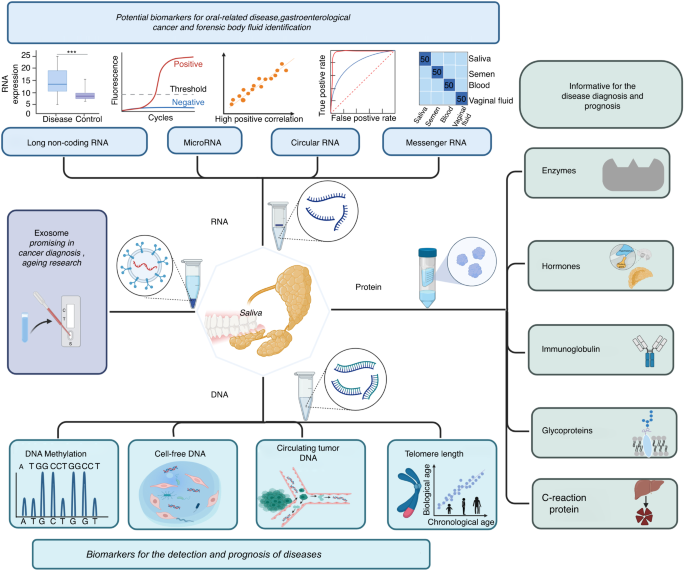
Promising applications of human-derived saliva biomarker testing in clinical diagnostics

alexandrossfakianakis shared this article with you from Inoreader

41368_2022_209_Fig1_HTML.png

International Journal of Oral Science, Published online: 04 January 2023; doi:10.1038/s41368-022-00209-w

Promising applications of human-derived saliva biomarker testing in clinical diagnostics
View on Web

Temporal Trends in Variability of Respirable Dust and Respirable Quartz Concentrations in the European Industrial Minerals Sector

alexandrossfakianakis shared this article with you from Inoreader
Abstract
While between- and within-worker variability have been studied quite extensively, hardly any research is available that examines long-term trends in the variability of occupational exposure. In this first study on trends in occupational exposure variability temporal changes in the variability of respirable dust and respirable quartz concentrations within the European industrial minerals sector were demonstrated. Since 2000 the European Industrial Minerals Association's Dust Monitoring Program (IMA-DMP) has systematically collected respirable dust and respirable quartz measurements. The resulting IMA-DMP occupational exposure database contains at present approximately 40 000 personal full-shift measurements, collected at 177 sites owned by 39 companies, located in 23 European countries. Repeated measurements of workers performing their duties within a specific site-job-campaign combination allowed estimation of within- and between-worker variabi lity in exposure concentrations. Overall day-to-day variability predominated the between-worker variability for both respirable dust concentrations and quartz concentrations. The within-worker variability in concentrations by job was two to three times higher for respirable quartz than for respirable dust. The median between-worker variability in respirable dust concentrations was low and further reduced over time. For quartz concentrations the same phenomenon albeit somewhat less strong was observed. In contrast, for the within-worker variability in concentrations downward and upward temporal trends were apparent for both respirable dust and respirable quartz. The study shows that the (relative) size of temporal variability is large and unpredictable and therefore regular measurement campaigns are needed to ascertain compliance to occupational exposure limit values.
View on Web

Δευτέρα 2 Ιανουαρίου 2023

Wnt Signaling Regulates MFSD2A-dependent Drug Delivery through Endothelial Transcytosis in Glioma

alexandrossfakianakis shared this article with you from Inoreader
Abstract
Background
Systemic delivery of anti-tumor therapeutic agents to brain tumors is thwarted by the blood-brain barrier (BBB), an organotypic specialization of brain endothelial cells (ECs). A failure of pharmacological compounds to cross BBB is one culprit for the dismal prognosis of glioblastoma (GBM) patients. Identification of novel vascular targets to overcome the challenges posed by the BBB in tumors for GBM treatment is urgently needed.
Methods
Temozolomide (TMZ) delivery was investigated in CT2A and PDGFB-driven RCAS/tv-a orthotopic glioma models. Transcriptome analysis was performed on ECs from murine gliomas. Mfsd2a deficient, Cav1 deficient and Mfsd2a EC specific inducible mice were developed to study the underlying molecular mechanisms.
Results
We demonstrated that inhibiting Wnt signaling by LGK974 could increase TMZ delivery and sensitize glioma to chemotherapy in both murine glioma models. Transcriptome analysis of ECs from murine gliomas revealed that Wnt signaling inhibition enhanced vascular transcytosis as indicated by the upregulation of PLVAP and downregulation of MSFD2A. Mfsd2a deficiency in mice enhances TMZ delivery in tumors, whereas constitutive expression of Mfsd2a in ECs suppresses the enhanced TMZ delivery induced by Wnt pathway inhibition in murine glioma. In addition, Wnt signaling inhibition enhanced caveolin-1 (Cav1)-positive caveolae-mediated transcytosis in tumor ECs. Moreover, Wnt signaling inhibitor or Mfsd2a deficiency fails to enhance TMZ penetration in tumors from Cav1-deficient mice.
Conclusions
These results demonstrated that Wnt signaling regulates MFSD2A-dependent TMZ deli very through a caveolae-mediated EC transcytosis pathway. Our findings identify Wnt signaling as a promising therapeutic target to improve drug delivery for GBM treatment.

View on Web