Πέμπτη 22 Απριλίου 2021

Role of NGF and its receptors in wound healing (Review)

xlomafota13 shared this article with you from Inoreader

Exp Ther Med. 2021 Jun;21(6):599. doi: 10.3892/etm.2021.10031. Epub 2021 Apr 11.

ABSTRACT

Wound healing is an important and complicated process that includes four highly integrated and overlapping phases, haemostasis, inflammation, proliferation and tissue remodelling. Nerve growth factor (NGF) was the first member of a family of neurotrophic factors to be discovered, and is an essential neurotrophic factor for the development and maintenance of the central and peripheral nervous systems. Several studies have proposed that NGF and its receptors, tropomyosin-related kinase receptor 1 and NGF receptor, are involved in the wound healing process, and are important components of the healing of several wounds both in vivo and in vitro. Topical application of NGF significantly promotes the healing of different types of wounds, including diabetic foot ulcers, pressure ulcers and corneal wounds. The present review summarizes the s tatus of NGF and its receptors in current literature, and discusses data obtained in the last few years on the healing action of NGF in cutaneous, corneal and oral wounds.

PMID:33884037 | PMC:PMC8056114 | DOI:10.3892/etm.2021.10031

View on the web

Role of Notch, IL-1 and leptin expression in colorectal cancer

xlomafota13 shared this article with you from Inoreader

Exp Ther Med. 2021 Jun;21(6):600. doi: 10.3892/etm.2021.10032. Epub 2021 Apr 11.

ABSTRACT

An increasing number of studies have shown that angiogenesis has an important role in the progression of cancer. The growth of a new network of blood vessels is crucial for tumor growth and metastasis, which is promoted by several proangiogenic factors. Leptin, an essential adipokine that is secreted from fat tissue, is one of these pro-angiogenic factors. It has been shown that the inhibition of leptin-induced angiogenesis resulted in decreased levels of vascular endothelial growth factor (VEGF)/VEGFR2, hypoxia inducible factor (HIF) 1α, NF-κB, IL-1 and Notch and reduced the tumor growth in breast cancer. Leptin induces angiogenesis in breast cancer either by upregulating VEGFR2 in endothelial cells or by increasing VEGF/VEGFR2 expression through the Notch, IL-1 and leptin crosstalk outcome (NILCO) pathway. NILCO is a novel mechanism that inter acts with proinflammatory and proangiogenic signals, which are critical for cell proliferation and angiogenesis in cancer. Several studies have shown that components of NILCO may affect human cancer incidence and progression. However, to the best of our knowledge, the interactions between Notch, IL-1 and leptin in human colorectal cancer have not been yet studied at the molecular level. The aim of the present study was to investigate the expression levels of genes related to the NILCO pathway in human colorectal cancer specimens. The current results demonstrated that leptin, leptin receptor (ObR) b, Notch-1, Notch-4, IL-1α, IL-1β, IL-1R, IL-6, JAK-2, STAT-1, STAT-3, VEGFA, VEGFR1, VEGFR2, TNF-α and NF-κB mRNA expression levels in the cancer tissue were increased compared with the normal tissue. No significant changes in the mRNA expression levels of Jagged-1, HIF-1α and TNF receptor 1 were observed. Western blotting revealed that the protein expression levels of IκB were incre ased in the cancer tissue compared with normal tissue, whereas HIF-1α and phosphorylated STAT-1 levels were decreased. IL-6 and VEGFA plasma concentrations were statistically raised and the leptin plasma concentration was also raised, although significantly, patients with cancer compared with control individuals. Together, the present findings indicated that Notch, IL-1 and leptin may serve a crucial role in the development of colorectal cancer.

PMID:33884038 | PMC:PMC8056113 | DOI:10.3892/etm.2021.10032

View on the web

Comparison of anti-inflammatory effects of Mecasin and its constituents on lipopolysaccharide-stimulated BV2 cells

xlomafota13 shared this article with you from Inoreader

Exp Ther Med. 2021 Jun;21(6):591. doi: 10.3892/etm.2021.10023. Epub 2021 Apr 8.

ABSTRACT

Mecasin, a traditional medicine, contains nine herbal constituents: Curcuma longa, Salvia miltio rhiza, Gastrodia elata, Chaenomeles sinensis, Polygala tenuifolia, Paeonia japonica, Glycyrrhiza uralensis, Atractylodes japonica and processed Aconitum carmichaeli. Several biological effects of mecasin have been described both in vivo and in vitro. Previous studies have demonstrated that mecasin has anti-inflammatory effects. The purpose of the present study was to determine anti-inflammatory effects of mecasin and its natural product constituents on lipopolysaccharide (LPS)-stimulated BV2 cells by measuring nitrite and nitric oxide contents. Nitrite production levels in LPS-stimulated BV2 cells incubated with mecasin and each individual constituent of mecasin were measured. The results suggested that C. longa , P. tenuifolia and P. japonica inhibited nitrite production in a pattern similar to that of mecasin. The effect of mecasin was likely a result of synergistic effects of its natural herb constituents.

PMID:33884029 | PMC:PMC8056109 | DOI:10.3892/etm.2021.10023

View on the web

A minimum 8-year follow-up comparative study of decompression and coflex stabilization with decompression and fusion

xlomafota13 shared this article with you from Inoreader

Exp Ther Med. 2021 Jun;21(6):595. doi: 10.3892/etm.2021.10027. Epub 2021 Apr 9.

ABSTRACT

The current study aimed to compare the outcomes of decompression and interlaminar stabilisation with those of decompression and fusion for the treatment of lumbar degenerative disease (LDD) at a minimum 8-year follow-up. The current study also aimed to analyse the risk factors of radiographic adjacent segment degeneration (ASD). A total of 82 consecutive patients with LDD who underwent surgery between June 2007 and February 2011 were retrospectively reviewed. Of these patients, 39 underwent decompression and Coflex interspinous stabilisation (Coflex group) and 43 underwent decompression and posterior lumbar interbody fusion (PLIF) (PLIF group). All patients had a minimum of 8-years of follow-up data. Radiographic and clinical outcomes were compared between the groups, and the risk factors of developing radiographic ASD were also evaluated. The Oswe stry disability index and visual analogue scale leg and back pain scores of both groups significantly improved compared with the baseline (all P<0.05), and no difference were indicated between the two groups at each follow-up time point (P>0.05). The Coflex group exhibited preserved mobility (P<0.001), which was associated with a decreased amount of blood loss (P<0.001), shorter duration of surgery (P=0.001), shorter duration of hospital stay and a lower incidence of ASD (12.8 vs. 32.56%; P=0.040) compared with the fusion group. The current study indicated that coflex and fusion technologies are safe and effective for the treatment of LDD, based on long-term follow-up data. However, Coflex interspinous stabilisation was revealed to reduce ASD incidence. Under strict indications, Coflex interspinous stabilisation is an effective and safe treatment method.

PMID:33884033 | PMC:PMC8056116 | DOI:10.3892/etm.2021.10027

View on the web

Cartilaginous bending spring for preventing tympanic membrane graft medialisation in anterior or subtotal tympanic membrane perforations-how I do it

xlomafota13 shared this article with you from Inoreader

Eur Arch Otorhinolaryngol. 2021 Apr 21. doi: 10.1007/s00405-021-06814-5. Online ahead of print.

ABSTRACT

BACKGROUND: The reconstruction of anterior or subtotal tympanic membrane perforations is critical due to the risk of anterior graft medialisation and retraction or recurrent perforation.

METHOD: After reconstruction of the tympanic membrane by means of grafting, a rectangular cartilage strut (length 6 mm, breadth 2 mm, thickness 0.1 mm) is prepared using a cartilage knife and scalpel. This strut graft is placed between the cartilage graft and the promontory in the anterior inferior part of the middle ear cavity.

CONCLUSION: Our experience shows that using a U-shaped cartilage strut to sustain the tympanic reconstruction effectively prevents the medialisation of the graft and recurrent perforations.

PMID:33884500 | DOI:10.1007/s00405-021-06814-5

View on the web

Τρίτη 20 Απριλίου 2021

Early postoperative serum albumin levels as predictors of surgical outcomes in head and neck squamous cell carcinoma

xlomafota13 shared this article with you from Inoreader

Braz J Otorhinolaryngol. 2021 Apr 9:S1808-8694(21)00063-X. doi: 10.1016/j.bjorl.2021.03.004. Online ahead of print.

ABSTRACT

BACKGROUND: Malnutrition is a common issue in patients with head and neck squamous cell carcinoma and has a negative effect on surgical outcomes.

OBJECTIVE: We attempted to determine which malnutrition diagnostic variables can be used as predictors of postoperative complications in patients with head and neck squamous cell carcinoma.

METHODS: Forty-one patients undergoing surgery for head and neck squamous cell carcinoma were submitted to a prospective evaluation. Biochemical data, anthropometric measurements and evaluation of body composition were used in the nutritional analysis.

RESULTS: Twenty-two patients (53.6%) developed complications. Serum albumin measured on the first postoperative day was the only variable that significantly differed between groups. A cut-off value of 2.8 g/dL disting uished between patients with a complicated and uncomplicated postoperative course. Normalization of albumin levels occurred more frequently and more rapidly in the noncomplicated group.

CONCLUSION: Serum albumin measured on the first postoperative day was the only variable that was a predicter of postoperative complications after major head and neck squamous cell carcinoma surgery.

PMID:33875388 | DOI:10.1016/j.bjorl.2021.03.004

View on the web

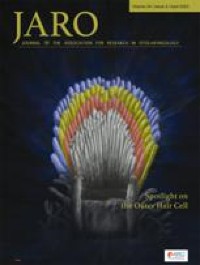
Phosphorylation of MYL12 by Myosin Light Chain Kinase Regulates Cellular Shape Changes in Cochlear Hair Cells

xlomafota13 shared this article with you from Inoreader

10162.jpg

Abstract

The organ of Corti is an auditory organ located in the cochlea, comprising hair cells (HCs) and other supporting cells. Cellular shape changes of HCs are important for the development of auditory epithelia and hearing function. It was previously observed that HCs and inner sulcus cells (ISCs) demonstrate cellular shape changes similar to the apical constriction of the neural epithelia. Apical constriction is induced via actomyosin cable contraction in the apical junctional complex and necessary for the physiological function of the epithelium. Actomyosin cable contraction is mainly regulated by myosin regulatory light chain (MRLC) phosphorylation by myosin light chain kinase (MLCK). However, MRLC and MLCK isoforms expressed in HCs and ISCs are unknown. Hence, we investigated the expression patterns and roles of MRLCs and MLCKs in HCs. Droplet digital PCR revealed that HCs expressed MYL12A/B and MYL9, which are non-muscle MRLC and smooth muscle MLCK (smMLCK), resp ectively. Immunofluorescence staining throughout the organ of Corti demonstrated that only MYL12 was expressed in the apical portion of HCs, whereas MYL12 and MYL9 were expressed on ISCs. In addition, purified MYL12B was phosphorylated by smMLCK in vitro, and the harvested HCs contained phosphorylated MYL12. Furthermore, accompanied by the expansion of the cell area of outer HCs, MYL12 phosphorylation was reduced by ML-7, which is an inhibitor of smMLCK. In conclusion, MYL12 phosphorylation by smMLCK contributed to the apical constriction-like cellular shape change of HCs possibly relating to the development of auditory epithelia and hearing function.

View on the web