Τρίτη 2 Οκτωβρίου 2018

Mechanical Work, Kinematics, and Kinetics during Sit-to-Stand in Children with and without Spastic Diplegic Cerebral Palsy

Publication date: Available online 1 October 2018

Source: Gait & Posture

Author(s): Duangporn Suriyaamarit, Sujitra Boonyong

Abstract
Background

Sit-to-stand (STS) is one of the most common fundamental activity in daily life. The pathology of the neuromuscular control system in children with spastic diplegic cerebral palsy (SDCP) could contribute to atypical movement patterns leading to the inefficiency performance including the STS task. However, there was also a lack of evidence about kinematics, kinetics, and especially mechanical work during the STS task in children with SDCP aged 7-12 years old.

Research question

What were the differences in mechanical work, kinematics and kinetics during STS task between children with SDCP and typically developing (TD) children?

Methods

Eleven children with SDCP (GMFCS I-II) and eleven age and gender-matched control TD children with an age range of 7-12 years were enrolled. Motion analysis and force plate systems were used to collect data. All participants performed the STS task from an adjustable chair. Independent sample t-test and two-way analysis of variance were used in this study.

Results

The children with SDCP took a longer time and used more mechanical work during STS than TD children. At the beginning of the STS task, children with SDCP showed more trunk flexion and posterior pelvic tilting; in addition, during the STS task they also presented more trunk, hip, and knee flexion than TD children. However, the children with SDCP showed less ankle dorsiflexion compared with TD children. For the kinetic variables, asymmetry was found in children with SDCP. The maximum hip and knee extension moment, plantar flexion moment, and peak vertical ground reaction force (GRF) of the non-dominant leg were higher than the values of the dominant leg in these children.

Significance

Even though, children with SDCP who are able to independently STS. They were also a mechanically less efficient performance during STS task. Therefore, this task still needs to be trained during rehabilitation sessions.


from #Audiology via ola Kala on Inoreader https://ift.tt/2zLqYEC
via IFTTT

Functional, Impulse-Based Quantification of Plantar Pressure Patterns in Typical Adult Gait

Publication date: Available online 1 October 2018

Source: Gait & Posture

Author(s): A.H. Vette, M. Funabashi, J. Lewicke, B. Watkins, M. Prowse, G. Harding, A. Silveira, M. Saraswat, S. Dulai

ABSTRACT
Background

Dynamic pedobarography is used to measure the change in plantar pressure distribution during gait. Clinical methods of pedobarographic analysis lack, however, a standardized, functional segmentation or require costly motion capture technology and expertise. Furthermore, while commonly used pedobarographic measures are mostly based on peak pressures, progressive foot deformities also depend on the duration the pressure is applied, which can be quantified via impulse measures.

Research Question

Our objectives were to: (1) develop a standardized method for functionally segmenting pedobarographic data during gait without the need for motion capture; (2) compute pedobarographic measures that are based on each segment’s vertical impulse; and (3) obtain a normative set of such pedobarographic measures for non-disabled gait.

Methods

Pedobarographic data was collected during gait from sixty adults with normal feet. Using the maximum pressure map for each trial, an expert and novice rater independently identified the hallux, heel, medial forefoot, and lateral forefoot and computed nine normalized vertical impulse measures.

Results

From the computed impulse measures, the Heel-to-Forefoot Balance was 33.3 ± 5.5%, the Medial-Lateral Forefoot Balance (with hallux) 59.2 ± 8.0%, the Medial-Lateral Forefoot Balance (without hallux) 53.5 ± 7.7%, and the Hallux-to-Medial Forefoot Balance 21.0 ± 8.9% (mean ± standard deviation). The intra- and inter-rater reliability ranged between 0.93 and 1.00 and between 0.89 and 0.99, respectively (ICC(2,1)).

Significance

We developed a simple, stand-alone method for pedobarographic segmentation that is mechanistically linked to relevant anatomical regions of the foot. The normative impulse measures exhibited excellent reliability. This normative dataset is currently used in the clinical assessment of different foot deformities and gait impairments, and in the evaluation of treatment outcomes.


from #Audiology via ola Kala on Inoreader https://ift.tt/2NekZvL
via IFTTT

Bayesian classification of falls risk

Publication date: Available online 1 October 2018

Source: Gait & Posture

Author(s): Matthew Martinez, Phillip L. De Leon, David Keeley

Abstract

Background: Prior research in falls risk prediction often relies on qualitative and/or clinical methods. There are two challenges with these methods. First, qualitative methods typically use falls history to determine falls risk. Second, clinical methods do not quantify the uncertainty in the classification decision. In this paper, we propose using Bayesian classification to predict falls risk using vectors of gait variables shown to contribute to falls risk. Research Questions: (1) Using a vector of risk ratios for specific gait variables shown to contribute to falls risk, how can older adults be classified as low or high falls risk? and (2) how can the uncertainty in the classifier decision be quantified when using a vector of gait variables? Methods: Using a pressure sensitive walkway, biomechanical measurements of gait were collected from 854 adults over the age of 65. In our method, we first determine low and high falls risk labels for vectors of risk ratios using the k-means algorithm. Next, the posterior probability of low or high falls risk class membership is obtained from a two component Gaussian Mixture Model (GMM) of gait vectors, which enables risk assessment directly from the underlying biomechanics. We classify the gait vectors using a threshold based on Youden's J statistic. Results: Through a Monte Carlo simulation and an analysis of the receiver operating characteristic (ROC), we demonstrate that our Bayesian classifier, when compared to the k-means falls risk labels, achieves an accuracy greater than 96% at predicting low or high falls risk. Significance: Our analysis indicates that our approach based on a Bayesian framework and an individual's underlying biomechanics can predict falls risk while quantifying uncertainty in the classification decision.


from #Audiology via ola Kala on Inoreader https://ift.tt/2zMtSci
via IFTTT

The effect of cervical spine subtypes on center of pressure parameters in a large asymptomatic young adult population

Publication date: Available online 1 October 2018

Source: Gait & Posture

Author(s): Lee Daffin, Max C Stuelcken, Mark G L Sayers


from #Audiology via ola Kala on Inoreader https://ift.tt/2NiMsMK
via IFTTT

Κυριακή 30 Σεπτεμβρίου 2018

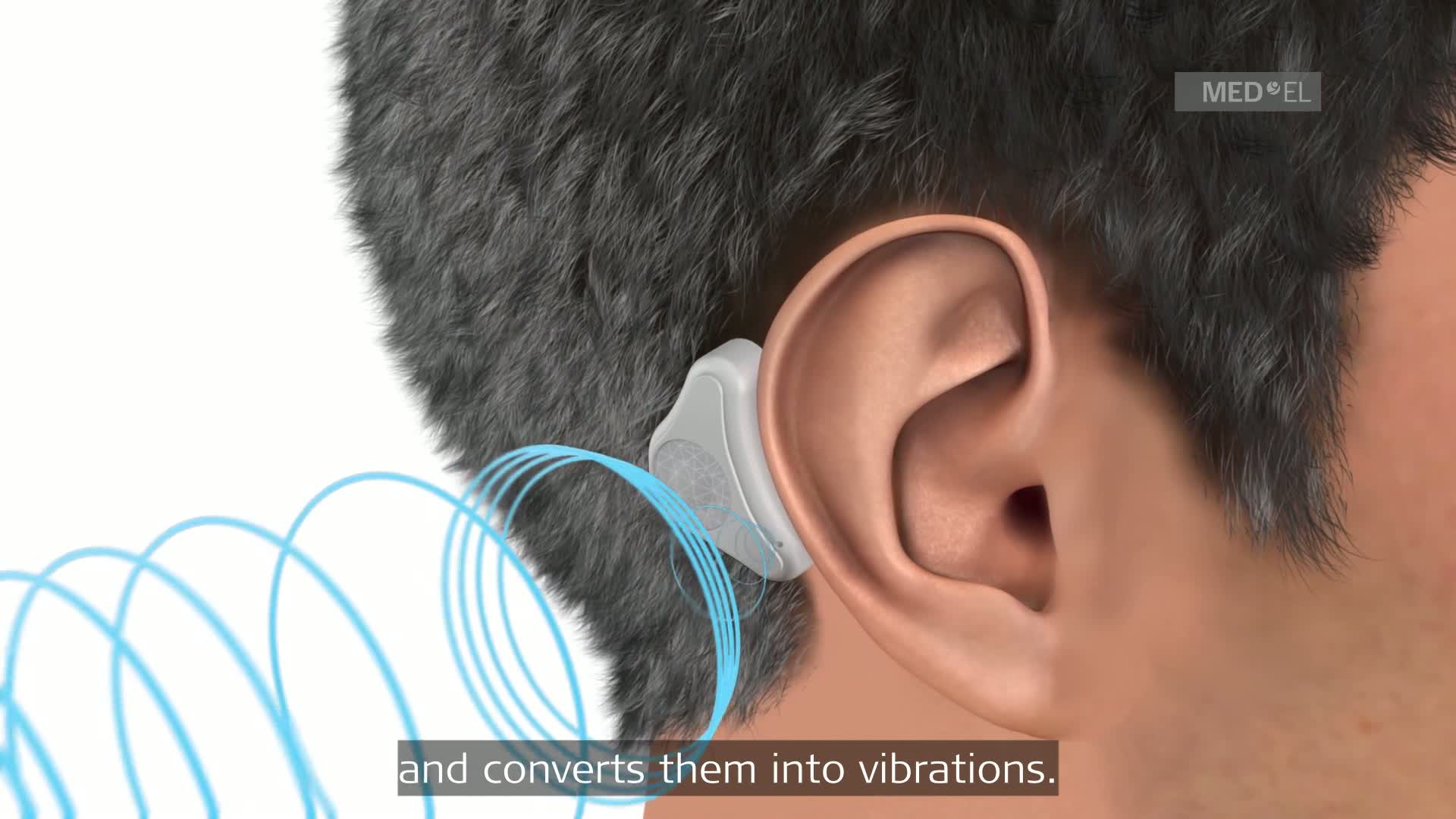
ADHEAR - A Revolution in Bone Conduction Technology

ADHEAR, MED-EL’s revolutionary bone conduction system, is comprised of an audio processor and adhesive adapter. ADHEAR does not apply pressure to the head, and is designed for all-day comfort, ease of use, and reliable, optimal positioning on the mastoid for consistent access to sound.

from #Audiology via ola Kala on Inoreader https://ift.tt/2zHDEwx
via IFTTT

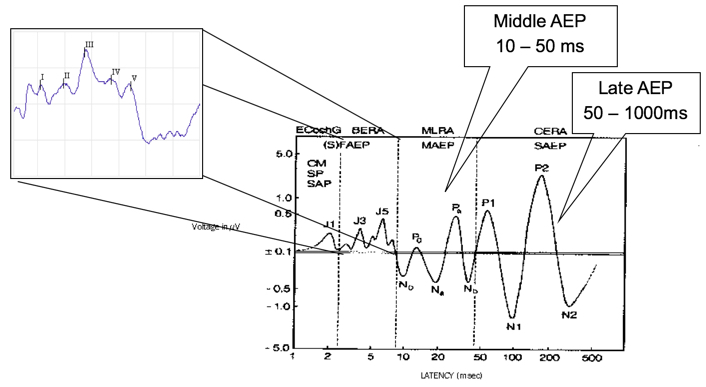
Evoked Potentials Part 1: Good Practice and Auditory Brainstem Response

This course describes Auditory Brainstem Response testing. Test parameters, waveform identification and diagnostic techniques are reviewed.

from #Audiology via ola Kala on Inoreader https://ift.tt/2DKfRzN
via IFTTT

ADHEAR - A Revolution in Bone Conduction Technology

ADHEAR, MED-EL’s revolutionary bone conduction system, is comprised of an audio processor and adhesive adapter. ADHEAR does not apply pressure to the head, and is designed for all-day comfort, ease of use, and reliable, optimal positioning on the mastoid for consistent access to sound.

from #Audiology via ola Kala on Inoreader https://ift.tt/2zHDEwx
via IFTTT