Τετάρτη 5 Σεπτεμβρίου 2018

Eficacia de un programa de fluidez lectora con escolares disléxicos

Publication date: Available online 5 September 2018

Source: Revista de Logopedia, Foniatría y Audiología

Author(s): Natalia Ferrada Quezada, Paula Outón Oviedo

Resumen
Antecedentes y objetivo

Una de las dificultades más comunes en la dislexia es la falta de fluidez lectora. Esta dificultad consiste en leer un texto con mucho esfuerzo, empleando excesivo tiempo y sin la expresión adecuada. El tratamiento de esta dificultad ha comprendido diversas estrategias, siendo la lectura oral repetida una de las más utilizadas. Los objetivos de este estudio fueron comprobar la eficacia de un programa de fluidez lectora centrado en la lectura repetida y expresiva de textos teatrales y determinar si su efectividad depende de la realidad sociocultural y económica de los estudiantes.

Método

En el estudio participaron 11 estudiantes de tercero y cuarto curso de educación primaria con dislexia, distribuidos en dos grupos según el centro educativo de procedencia (público o concertado). Para comprobar la eficacia del programa se optó por un diseño preexperimental pretest postest. Como variables dependientes de la fluidez se utilizaron la exactitud, la automatización y la prosodia, medidas a través de la lectura de textos teatrales, la prueba Fundar y una Escala de Apreciación de la Prosodia.

Resultados

Los resultados mostraron que los participantes mejoraron significativamente en automatización y prosodia, pero no tanto en exactitud lectora. Además, el programa obtuvo resultados similares en ambos grupos de estudiantes.

Conclusiones

Estos hallazgos coinciden con otros estudios y sugieren que la lectura de textos teatrales es una estrategia eficaz para la mejora de la fluidez lectora en el alumnado disléxico de estas edades.

Abstract
Background and objective

One of the most common difficulties for dyslexics is the lack of reading fluency. This difficulty involves a lot of effort in order to read a text, spending an excessive amount of time, and with a lack of expressiveness. For the treatment of this difficulty, several strategies have been considered, repeated reading being the most commonly used. The aims of this study are to determine the effectiveness of an intervention programme aimed at improving reading fluency through theatre scripts, and observe whether the results depend upon students’ sociocultural and economic background.

Method

The sample consisted of 11 third- and fourth-grade students with dyslexia distributed into two groups according to the educational centre of provenance (public or charter school). A pre-experimental design pre-test and post-test study approach was used to prove the effectiveness of the programme. Automation and prosody were evaluated as accuracy-dependent variables through the reading of theatrical texts, the Fundar Reading Proficiency test, and a Scale of Prosody Assessment.

Results

Results indicate that children improved significantly in automation and prosody, but not that much in reading accuracy. Furthermore, the programme obtained similar results in both groups.

Conclusions

These findings match other studies and suggest that the reading of theatrical texts is an effective strategy for improving reading fluency in dyslexic students of this age group.


from #Audiology via ola Kala on Inoreader https://ift.tt/2Q49U2R
via IFTTT

Eficacia de un programa de fluidez lectora con escolares disléxicos

Publication date: Available online 5 September 2018

Source: Revista de Logopedia, Foniatría y Audiología

Author(s): Natalia Ferrada Quezada, Paula Outón Oviedo

Resumen
Antecedentes y objetivo

Una de las dificultades más comunes en la dislexia es la falta de fluidez lectora. Esta dificultad consiste en leer un texto con mucho esfuerzo, empleando excesivo tiempo y sin la expresión adecuada. El tratamiento de esta dificultad ha comprendido diversas estrategias, siendo la lectura oral repetida una de las más utilizadas. Los objetivos de este estudio fueron comprobar la eficacia de un programa de fluidez lectora centrado en la lectura repetida y expresiva de textos teatrales y determinar si su efectividad depende de la realidad sociocultural y económica de los estudiantes.

Método

En el estudio participaron 11 estudiantes de tercero y cuarto curso de educación primaria con dislexia, distribuidos en dos grupos según el centro educativo de procedencia (público o concertado). Para comprobar la eficacia del programa se optó por un diseño preexperimental pretest postest. Como variables dependientes de la fluidez se utilizaron la exactitud, la automatización y la prosodia, medidas a través de la lectura de textos teatrales, la prueba Fundar y una Escala de Apreciación de la Prosodia.

Resultados

Los resultados mostraron que los participantes mejoraron significativamente en automatización y prosodia, pero no tanto en exactitud lectora. Además, el programa obtuvo resultados similares en ambos grupos de estudiantes.

Conclusiones

Estos hallazgos coinciden con otros estudios y sugieren que la lectura de textos teatrales es una estrategia eficaz para la mejora de la fluidez lectora en el alumnado disléxico de estas edades.

Abstract
Background and objective

One of the most common difficulties for dyslexics is the lack of reading fluency. This difficulty involves a lot of effort in order to read a text, spending an excessive amount of time, and with a lack of expressiveness. For the treatment of this difficulty, several strategies have been considered, repeated reading being the most commonly used. The aims of this study are to determine the effectiveness of an intervention programme aimed at improving reading fluency through theatre scripts, and observe whether the results depend upon students’ sociocultural and economic background.

Method

The sample consisted of 11 third- and fourth-grade students with dyslexia distributed into two groups according to the educational centre of provenance (public or charter school). A pre-experimental design pre-test and post-test study approach was used to prove the effectiveness of the programme. Automation and prosody were evaluated as accuracy-dependent variables through the reading of theatrical texts, the Fundar Reading Proficiency test, and a Scale of Prosody Assessment.

Results

Results indicate that children improved significantly in automation and prosody, but not that much in reading accuracy. Furthermore, the programme obtained similar results in both groups.

Conclusions

These findings match other studies and suggest that the reading of theatrical texts is an effective strategy for improving reading fluency in dyslexic students of this age group.


from #Audiology via ola Kala on Inoreader https://ift.tt/2Q49U2R
via IFTTT
Τρίτη 4 Σεπτεμβρίου 2018

Evaluation of Modern Remote Microphone Technologies

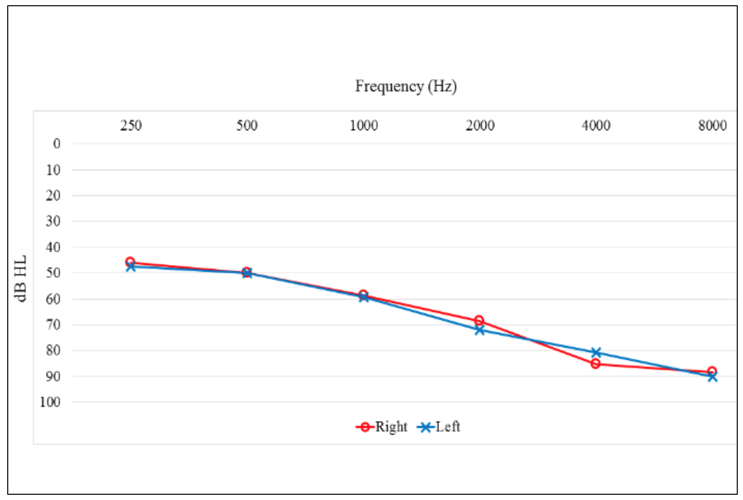
Using remote microphone technology is the most effective method to improve speech recognition in noise for hearing aid users, with a variety of different remote microphone solutions available today. In this investigation, adult hearing aid users were tested with their hearing aids alone and in combination with three remote microphones differing in the type of microphone and gain behavior.

from #Audiology via ola Kala on Inoreader https://ift.tt/2wDlUiM
via IFTTT

Evaluation of Modern Remote Microphone Technologies

Using remote microphone technology is the most effective method to improve speech recognition in noise for hearing aid users, with a variety of different remote microphone solutions available today. In this investigation, adult hearing aid users were tested with their hearing aids alone and in combination with three remote microphones differing in the type of microphone and gain behavior.

from #Audiology via ola Kala on Inoreader https://ift.tt/2wDlUiM
via IFTTT

The role of speech rate for Italian-speaking cochlear implant users: insights for everyday speech perception

.


from #Audiology via ola Kala on Inoreader https://ift.tt/2NaDllp
via IFTTT

Patients’ experiences of living with superior canal dehiscence syndrome

.


from #Audiology via ola Kala on Inoreader https://ift.tt/2CkQFzk
via IFTTT

Construction and evaluation of the Mandarin Chinese matrix (CMNmatrix) sentence test for the assessment of speech recognition in noise

.


from #Audiology via ola Kala on Inoreader https://ift.tt/2NcrLpR
via IFTTT