In this presentation, we will discuss the foundations of ethics and compliance in audiology, as well as U.S. regulations. We will explore the AAA and ASHA Codes of Ethics, state ethical guidelines contained in several state licensure laws, Medicare, HIPAA, the FDA Guidelines, Stark laws, and Anti-kickback laws and explain, in detail, how they relate to specific scenarios we encounter in audiology.
from #Audiology via ola Kala on Inoreader https://ift.tt/2KnQVNK
via IFTTT
Δευτέρα 30 Απριλίου 2018

Perception of Own Voice Wearing Hearing Aids: Why "Natural" is the New Normal
This text-based course reviews the common issue of hearing aid wearers perceiving their own voice as unnatural when wearing hearing aids. Findings from a recent study evaluating a new algorithm to address this issue available in Signia Nx hearing aids, Own Voice Processing (OVP), are discussed. 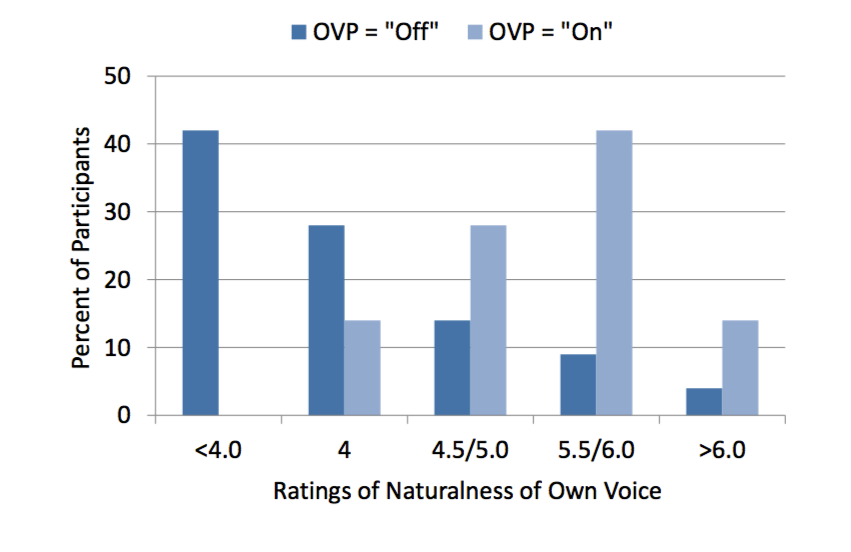
from #Audiology via ola Kala on Inoreader https://ift.tt/2Ft1knP
via IFTTT
from #Audiology via ola Kala on Inoreader https://ift.tt/2Ft1knP
via IFTTT
Perception of Own Voice Wearing Hearing Aids: Why "Natural" is the New Normal
This text-based course reviews the common issue of hearing aid wearers perceiving their own voice as unnatural when wearing hearing aids. Findings from a recent study evaluating a new algorithm to address this issue available in Signia Nx hearing aids, Own Voice Processing (OVP), are discussed.
from #Audiology via xlomafota13 on Inoreader https://ift.tt/2Ft1knP
via IFTTT
from #Audiology via xlomafota13 on Inoreader https://ift.tt/2Ft1knP
via IFTTT
Σάββατο 28 Απριλίου 2018
Hearing Aid Use Reduces Hospital and ER Visits in Older Adults
 Hearing aid use among older adults is associated with fewer hospitalizations and emergency visits and fewer nights at the hospital, study finds.
Examining the data of 1,336 adults aged 65 to 85 years with severe hearing loss, researchers from University of Michigan found out that the 602 adults (42% of the study participants) who used hearing aids had fewer adverse health events than those who do not use hearing aids. The study reported that while the difference of the incidence of hospitalization or emergency room visit was only approximately two percentage points, it was large enough to be significant. Also, the research found out that those with hearing aids had shorter stays in the hospital.
The data used came from a self-reported survey by the U.S. Department of Health and Human Services, Agency for Healthcare Research and Quality. The researchers had no objective measurement of how severe the participant's hearing loss, the number of hearing aids they use and the how consistently the hearing aids were used. "This was a cross-sectional study and had many limitations, yet I am still very confident about the findings," lead author Dr. Elham Mahmoudi, PhD, MBA. said. "We are involved in a longitudinal analysis of the effect of hearing aids among individuals with severe hearing loss and conducting a cost-effectiveness analysis of hearing aids."
Results of the study included cost implications. The use of hearing aid correlated with reduced Medicare expense, and higher annual health care spending and out-of-pocket spending.
"Hearing aids are not covered by Medicare. If they are covered by insurance, the out-of-pocket costs are relatively high. These financial barriers prevent many individuals from having access to proper hearing aids. Severe hearing loss affects a growing number of individuals, but it is an addressable disability issue. We are hoping that our findings encourage insurers—particularly Medicare—to cover hearing aids and the related care," Mahmoudi explained.
When asked about what inspired the study, Mahnmoudi told The Hearing Journal that it was personal. "My dad is 82 years old and has been suffering from severe hearing loss for many years. Hearing aids are expensive and are not covered by health insurance. If not fitted well by a specialist, they can be noisy and annoying. Consequently, my dad resisted using hearing aids despite his apparent need. As a result, I personally witnessed his hearing difficulty result in social isolation and fewer meaningful conversation with friends and family members. In February 2017, I started working in the Department of Family Medicine. I was amazed that the Chair of our Department, Dr. Phillip Zazove, and another faculty member, Dr. Michael McKee (both co-authors in this manuscript), are deaf yet, with the use of hearing devices, are excellent physicians and researchers. My motivation to complete this study was inspired by them."
Mahmoudi and colleagues are already examining five-year insurance data and patient data from the University of Michigan's academic medical center to further study the issue to see if hearing aids might be, in the longer run, more cost-effective.
Published: 4/27/2018 3:21:00 PM
from #Audiology via ola Kala on Inoreader https://ift.tt/2vWYVSS
via IFTTT
Hearing Screening for Public Safety Professionals – New Method for 'Fitness for Duty' Assessments
Hearing is an important part of fitness-for-duty assessments of police officers and other public safety professionals – but standard hearing tests don't give a true picture of whether these professionals can hear and communicate in the specific "noise environments" where they must work. A new approach to hearing assessment in public safety officers − which has been adopted by five government agencies in the United States and Canada − is presented in an article in Ear and Hearing. The official journal of the American Auditory Society, Ear and Hearing is published by Wolters Kluwer.
An international group led by Sigfrid D. Soli, PhD, of the House Clinic, Los Angeles, has developed and validated a new method for assessing auditory fitness for duty for public safety occupations – focusing on whether these professionals can perform "hearing-critical" job tasks in the settings where they must work. "This method is the first to provide an objective, evidence-based means assessing functional hearing in individuals who must perform hearing-critical job tasks that can directly affect public safety," Dr. Soli commented.
New Model for Occupational Hearing Screening Accounts for 'Real-World Noise Environments'
Dr. Soli and colleagues have taken a new approach to assessing fitness for duty in public safety professionals with hearing loss. Current guidelines for hearing screening use standard diagnostic tests of hearing disorders, such as pure-tone audiometry. However, these tests do not necessarily provide objective information as to whether the individual can effectively perform essential hearing-critical job tasks in everyday occupational settings.
With standard diagnostic hearing tests, some individuals with hearing loss can be denied access to public safety positions or removed from their jobs – even with hearing technologies that may allow them to function adequately. Current approaches also may not be valid under the Americans with Disabilities Act, which requires that screening criteria reflect the actual requirements of the job.
To develop their model, Dr. Soli and colleagues conducted research to evaluate hearing-critical tasks and real-world noise environments in public safety and law enforcement jobs: specifically, law enforcement and corrections officers. Their studies included expert analyses of the essential hearing-critical tasks for each type of job, along with on-site recordings of the noise environments where those tasks are performed.
The studies included many noise environments for law enforcement and corrections officers. For example, for police officers, effective in-person and radio communications often take place in a background of indoor and outdoor voices, vehicle sounds, sirens, and other noises. The researchers used the Extended Speech Intelligibility Index, which is based on an American National Standard, to obtain measures of functional hearing ability necessary for effective speech communication in each noise environment.
The researchers found that even for individuals with normal hearing, real-world noise environments pose a challenge to effective communication. In noisy environments, the likelihood of effective speech communication at distances of one meter or less was often predicted to be less than 50 percent. With raised or loud vocal effort, predicted likelihood values increased to 80 percent or higher. At distances of five meters or beyond, effective speech communication was often unlikely, regardless of vocal effort.
Based on their findings, Dr. Soli and colleagues developed a method for predicting the likelihood of effective speech communication in each real-world noise environment. In a companion article, published in the International Journal of Audiology, they validated these predictions in samples of adults with normal hearing and those with mild to moderate hearing impairment. They stated that "these predictions provide an objective means of occupational hearing screening" that more accurately reflects the way functional hearing ability influences job performance.
The two articles, published simultaneously, are accompanied by a commentary by Judy R. Dubno, PhD, of Medical University of South Carolina, Charleston. She stated that the new studies "are an important example of a more ecologically valid approach that assesses an individual's ability to perform hearing-critical tasks in their occupational listening environments." She also observed that there may be broader applications, noting that "such an approach would likely be more relevant and understandable to patients/consumers and could lead to more accurate assessments and more effective interventions for people with hearing loss."
Published: 4/27/2018 1:53:00 PM
from #Audiology via ola Kala on Inoreader https://ift.tt/2r82DUM
via IFTTT
Light-Driven Hearing Aid Wins Edison Award
Earlens (https://earlens.com/) has received the Best New Product Award at the 2018 Edison Awards for its light-driven hearing aid. The Earlens Hearing Aid uses focused light and a small lens resting on the eardrum. Together, they create a rich, natural sound by expanding the frequency range delivered to the user. This technology also eliminates the major source of whistling afflicting conventional hearing aids. Clinical studies have shown that Earlens Hearing Aid can make it easier for people with mild to severe sensorineural hearing loss to understand speech in noisy environments. The Edison Awards is an annual competition honoring excellence in new product and service development, marketing, human-centered design, and innovation. They are given to game-changing products and services, as well as excellence and leadership in innovation.
Published: 4/27/2018 1:52:00 PM
from #Audiology via ola Kala on Inoreader https://ift.tt/2vWYLee
via IFTTT
Hearing Aid Use Reduces Hospital and ER Visits in Older Adults
Hearing aid use among older adults is associated with fewer hospitalizations and emergency visits and fewer nights at the hospital, study finds.
Examining the data of 1,336 adults aged 65 to 85 years with severe hearing loss, researchers from University of Michigan found out that the 602 adults (42% of the study participants) who used hearing aids had fewer adverse health events than those who do not use hearing aids. The study reported that while the difference of the incidence of hospitalization or emergency room visit was only approximately two percentage points, it was large enough to be significant. Also, the research found out that those with hearing aids had shorter stays in the hospital.
The data used came from a self-reported survey by the U.S. Department of Health and Human Services, Agency for Healthcare Research and Quality. The researchers had no objective measurement of how severe the participant's hearing loss, the number of hearing aids they use and the how consistently the hearing aids were used. "This was a cross-sectional study and had many limitations, yet I am still very confident about the findings," lead author Dr. Elham Mahmoudi, PhD, MBA. said. "We are involved in a longitudinal analysis of the effect of hearing aids among individuals with severe hearing loss and conducting a cost-effectiveness analysis of hearing aids."
Results of the study included cost implications. The use of hearing aid correlated with reduced Medicare expense, and higher annual health care spending and out-of-pocket spending.
"Hearing aids are not covered by Medicare. If they are covered by insurance, the out-of-pocket costs are relatively high. These financial barriers prevent many individuals from having access to proper hearing aids. Severe hearing loss affects a growing number of individuals, but it is an addressable disability issue. We are hoping that our findings encourage insurers—particularly Medicare—to cover hearing aids and the related care," Mahmoudi explained.
When asked about what inspired the study, Mahnmoudi told The Hearing Journal that it was personal. "My dad is 82 years old and has been suffering from severe hearing loss for many years. Hearing aids are expensive and are not covered by health insurance. If not fitted well by a specialist, they can be noisy and annoying. Consequently, my dad resisted using hearing aids despite his apparent need. As a result, I personally witnessed his hearing difficulty result in social isolation and fewer meaningful conversation with friends and family members. In February 2017, I started working in the Department of Family Medicine. I was amazed that the Chair of our Department, Dr. Phillip Zazove, and another faculty member, Dr. Michael McKee (both co-authors in this manuscript), are deaf yet, with the use of hearing devices, are excellent physicians and researchers. My motivation to complete this study was inspired by them."
Mahmoudi and colleagues are already examining five-year insurance data and patient data from the University of Michigan's academic medical center to further study the issue to see if hearing aids might be, in the longer run, more cost-effective.
Published: 4/27/2018 3:21:00 PM
from #Audiology via ola Kala on Inoreader https://ift.tt/2vWYVSS
via IFTTT
Εγγραφή σε:
Αναρτήσεις (Atom)